Job interviews are stressful enough without also stressing over your hair.
The good news is that easy hairstyles for interview settings don’t need to be complicated, most of them take five to ten minutes and use basic tools like a hair tie, a couple of bobby pins, or a claw clip.
What matters more is picking a style that keeps hair off your face, looks neat on camera or in person, and matches the tone of the role you’re interviewing for. Here are some real examples to work from.
Easy Hairstyles For Interview
Low Bun With a Center Part

This one is about as classic as interview hair gets, hair pulled back smooth into a low bun at the nape, with a clean center part and small pearl studs finishing it off.
It works because it’s completely out of your face, doesn’t move around when you gesture or lean forward, and reads as polished without looking like you spent an hour on it.
This is a safe pick for law, finance, or any interview where you want the focus entirely on what you’re saying.
Sleek Low Ponytail
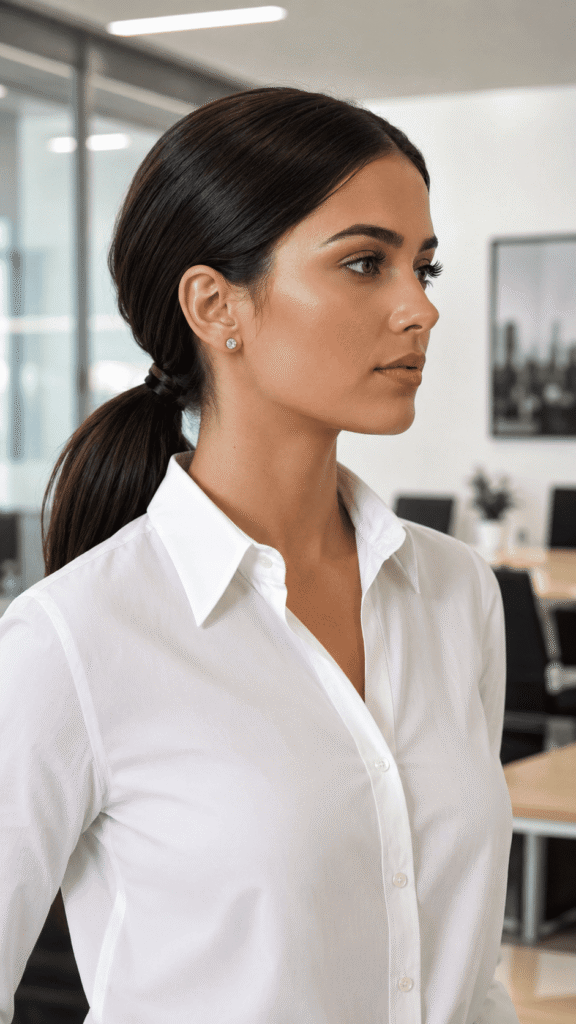
Similar to the bun but slightly less formal, this style pulls the hair straight back into a low ponytail secured with a small elastic, left smooth against the head.
It’s one of the fastest options on this list, you genuinely just need a brush and a hair tie. Because the ponytail sits low rather than high, it keeps a professional, grounded look rather than something that feels more casual or sporty.
Half-Up Twist With Face-Framing Pieces
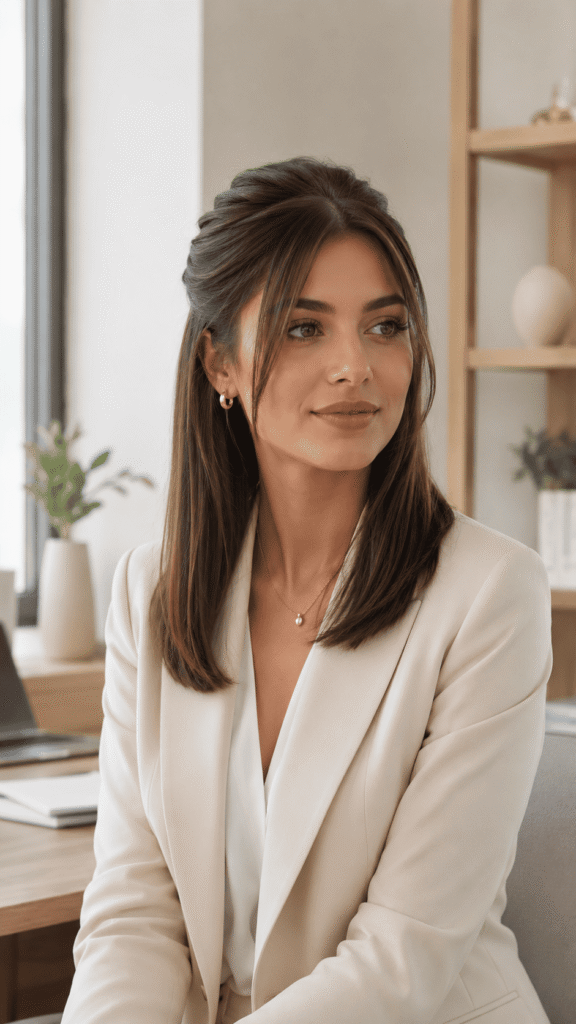
Here, the top section of hair is twisted back and secured, while the rest is left down with a couple of soft pieces framing the face.
This is a good middle ground if you don’t want your hair fully up but still want it controlled, the twist keeps hair off your forehead during the interview, and the loose length in the back still looks like your normal hair rather than a styled updo.
Long Waves Left Down, Middle Part

Sometimes the easiest option really is leaving your hair down, and this loose, wavy style with a natural middle part proves it can still look intentional.
The key here is making sure your hair is brushed and free of major frizz or flyaways, waves like this photograph well because they’re soft, not stiff or overly curled.
This works especially well for interviews with a more relaxed or creative company culture.
High Twisted Bun
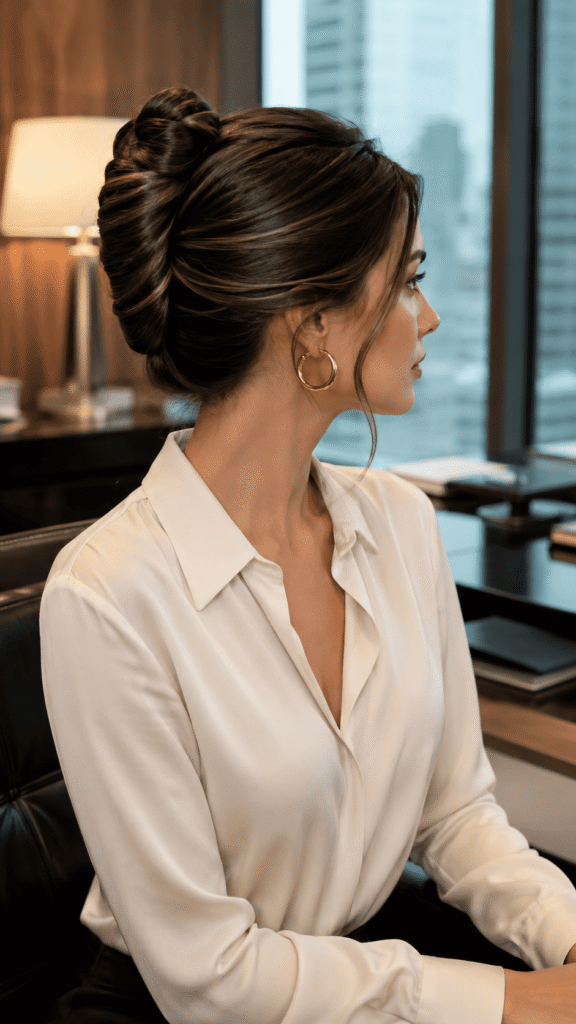
This style takes the hair straight up into a smooth, twisted bun sitting high on the crown, which gives a slightly more formal, put-together look than a low bun.
Twisting the hair before securing it (rather than just wrapping it into a plain bun) helps it hold shape longer through a long interview day, and the height works well if you’re wearing a collared shirt or blazer with a higher neckline.
Textured Low Bun With a Claw Clip
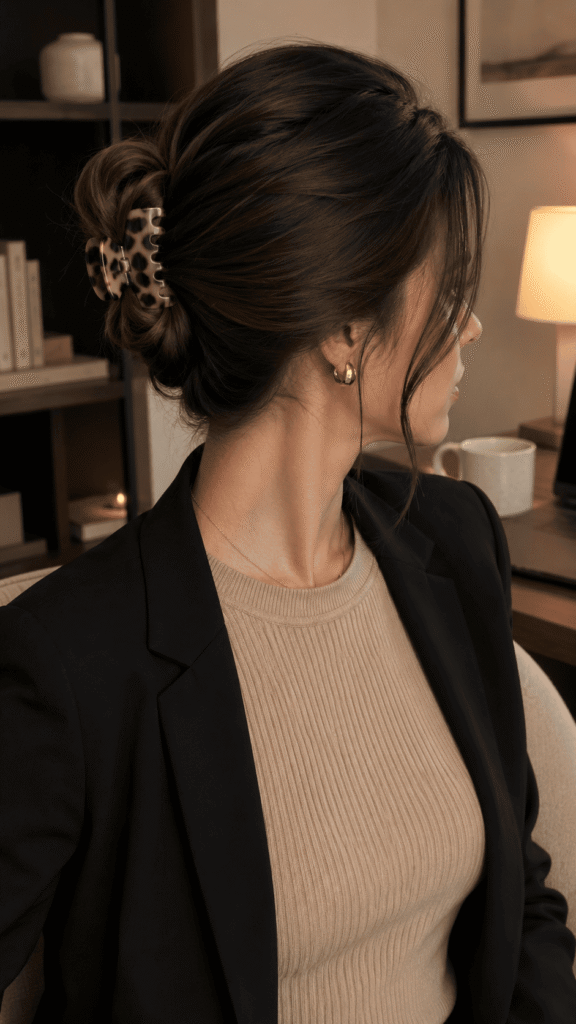
This is probably the fastest style on the entire list, hair gathered loosely at the back and secured with a large claw clip, no bobby pins or hair ties required.
A tortoiseshell or leopard print clip like this one adds a small personal touch while still looking tidy. This is a great backup option if you’re running short on time the morning of your interview or if bobby pins never seem to stay in your hair.
Loose Low Bun With Side-Swept Pieces
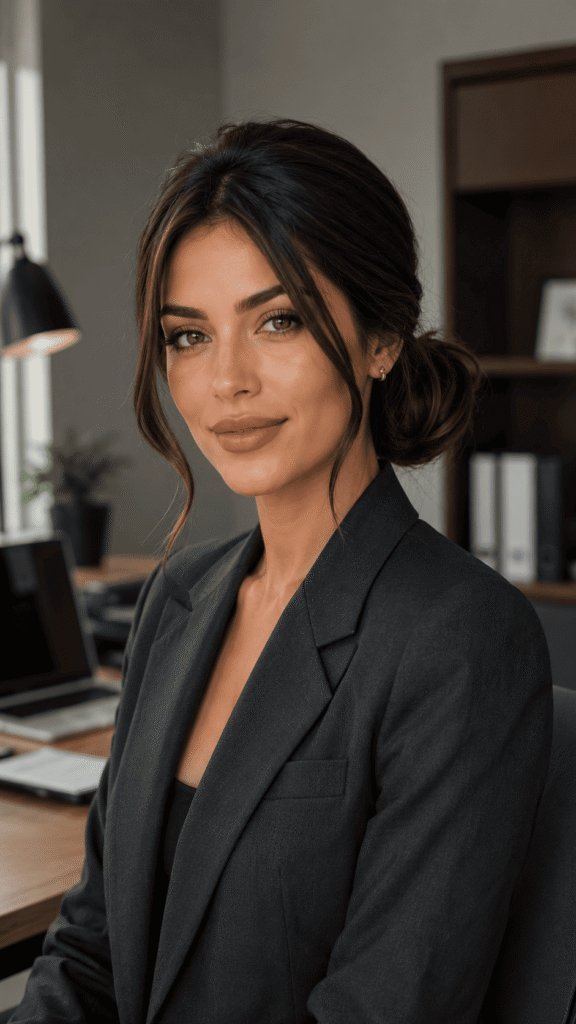
This look softens the classic low bun by leaving a bit more hair loose around the face and letting a few strands fall naturally rather than slicking everything back.
It’s a good choice if a fully sleek bun feels too severe for your features or the role you’re interviewing for, since the looser pieces add warmth without sacrificing the neatness a bun provides.
Shoulder-Length Hair, Blown Out Straight
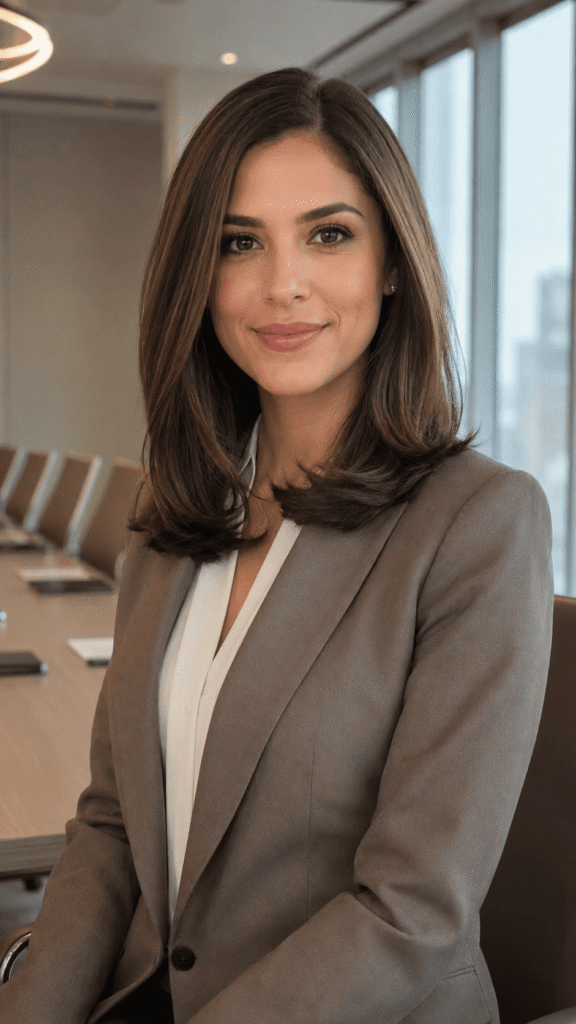
Not every interview style needs to involve pulling hair back. This one shows shoulder-length hair blown out smooth and straight with a slight inward curve at the ends.
If your hair is already at this length and healthy, a basic blowout (even a five-minute one with a round brush) can look just as professional as an updo, especially for interviews over video call where a tidy, straight style photographs cleanly.
Sleek Braided Ponytail
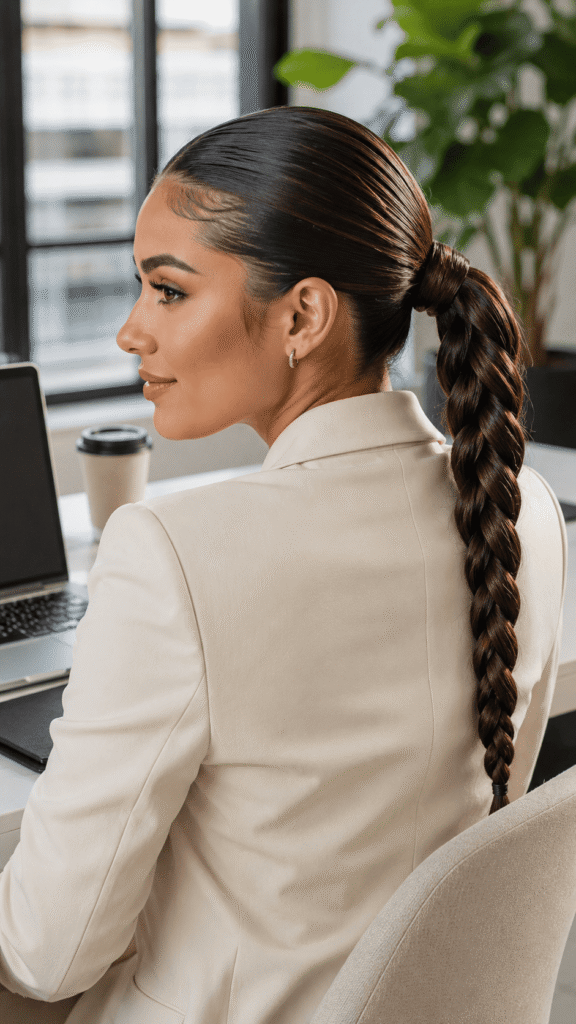
This one takes the low ponytail up a notch by braiding the length into a thick, tight braid rather than leaving it loose.
The smooth, slicked-back top keeps it looking controlled, while the braid adds a bit more texture and interest than a plain ponytail.
It’s slightly more effort than option two on this list, but still doable in under ten minutes if you’re comfortable braiding your own hair.
High Ponytail With Waves
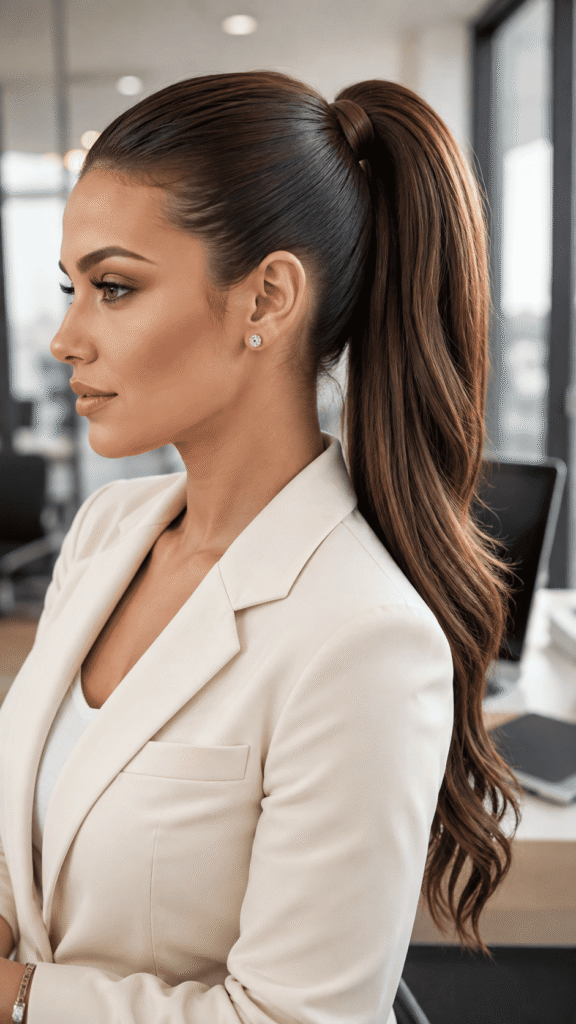
This style keeps things sleek at the crown but adds soft waves through the length of a high ponytail, giving it more movement than a straight, tight version.
The high placement is worth noting, it’s a bit more energetic and youthful-looking than a low pony, so it might suit interviews in more casual or creative industries better than very traditional corporate settings.
Sleek Bob, No Extra Styling Needed
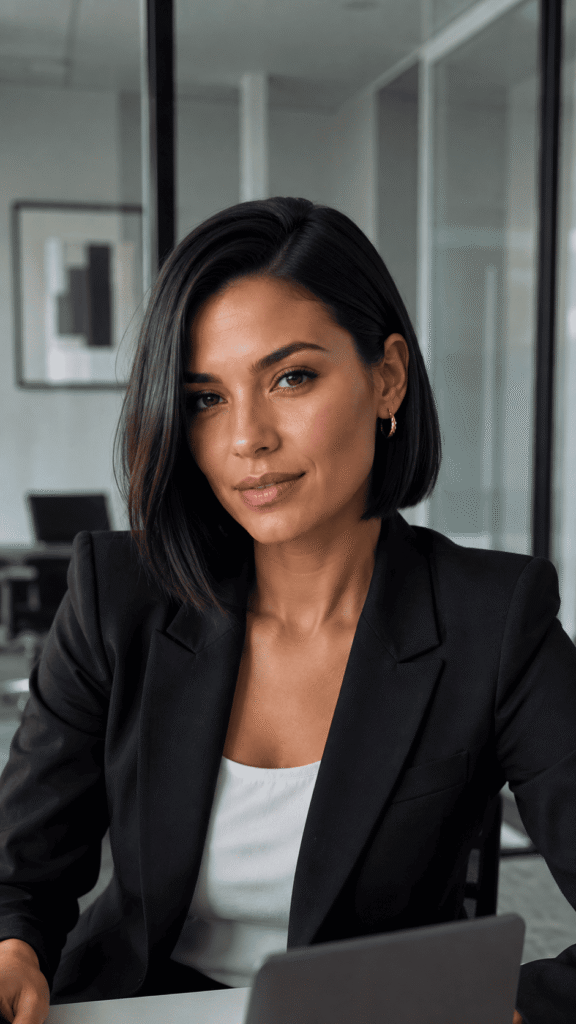
If you already have a shoulder-length bob, this is proof you may not need to do anything extra at all.
This cut is left completely natural and straight with a deep side part, and it still reads as professional simply because the cut itself is clean.
Sometimes the easiest interview hairstyle is the haircut you already have, styled the way it normally falls.
Half-Up Twist From the Back
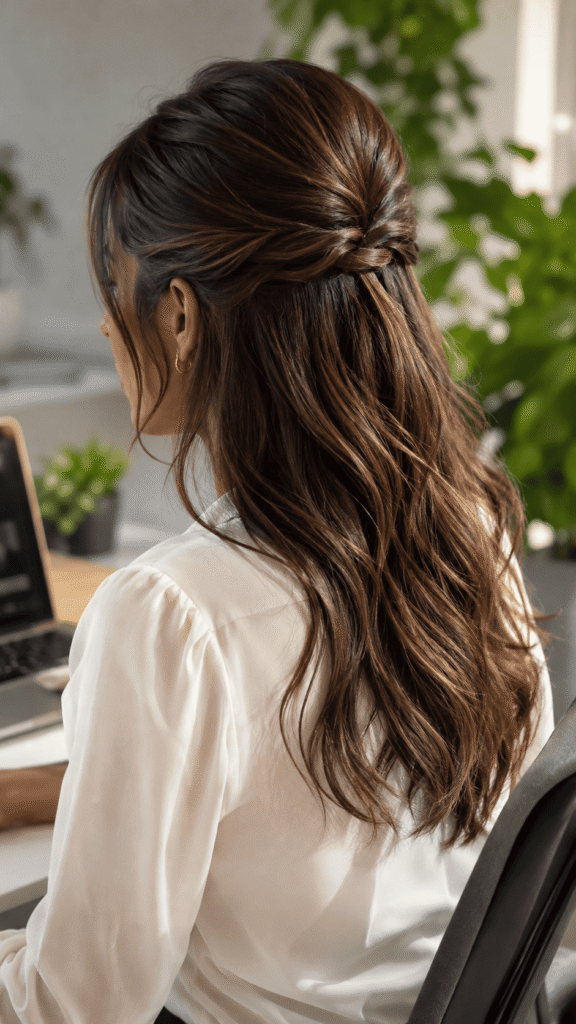
Shown from behind, this style twists two small sections from either side of the crown and joins them at the back, leaving the rest of the hair down in loose waves.
It’s a nice option if you want a half-up look but aren’t confident doing a full braid or elaborate twist, this version only needs two small twists and a bobby pin or two to secure.
Low Bun With a Deep Side Part
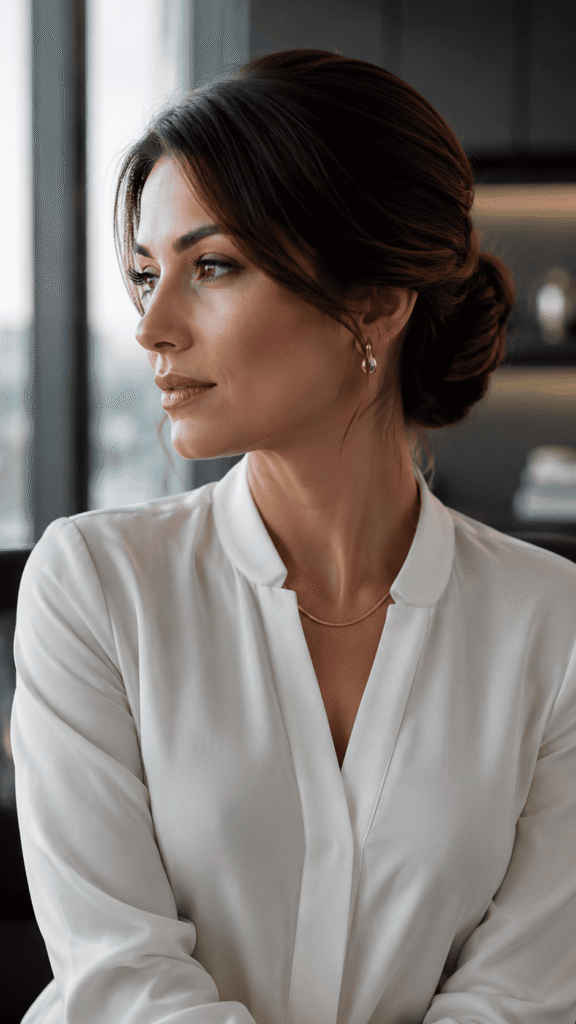
This last one takes the classic low bun and adds a deep side part at the front instead of a center part, which softens the whole look and can be more flattering depending on your face shape.
It’s proof that small changes to a basic style, like where you part your hair, can shift the overall feel without adding any extra time to your routine.
How to Make Any Interview Hairstyle Last All Day
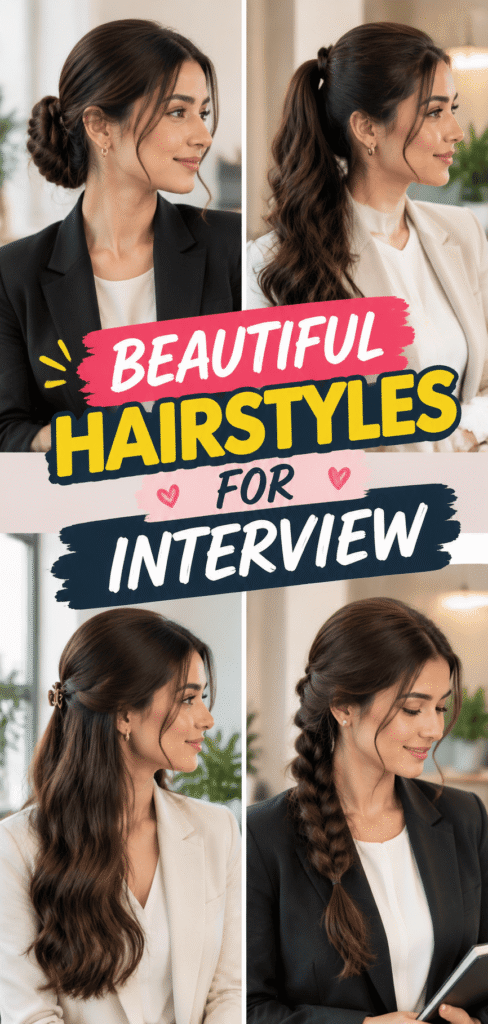
No matter which style you pick, a few small habits make a real difference in how your hair holds up between getting ready and actually walking into the interview.
- Prep the night before if you can. Washing your hair the night before rather than the morning of usually gives you more grip and less slipping, especially for buns, ponytails, and twists. Freshly washed hair can be too slippery to hold pins well.
- Use a light-hold product, not heavy gel. A small amount of smoothing serum or light hairspray controls flyaways without making your hair look stiff or overly shiny under office lighting.
- Secure with bobby pins in an X shape. If you’re doing any kind of bun or twist, crossing two bobby pins in an X rather than sliding them in parallel holds much better and is less likely to slip out over a few hours.
- Do a final check under real light. Whatever light you get ready in at home isn’t the same as office lighting or a video call setup. Check your hair near a window or under a brighter lamp before you leave, since flyaways show up more under bright light.
- Keep a small emergency kit in your bag. A couple of extra bobby pins, a small travel hairspray, and a compact mirror take up almost no space and can save you if something shifts on the way there.
- Practice the style once beforehand. Even a simple bun or ponytail can take a couple of tries to get right the first time. Doing a practice run a day or two before means you’re not rushing or guessing on the actual morning.
Final Thoughts
You don’t need a complicated routine to look ready for an interview, a low bun, a sleek ponytail, or even your hair left down and brushed out can all work depending on the role and how much time you have.
Pick the style that matches your hair type and the industry you’re interviewing in, do a quick practice run beforehand, and you’ll walk in with one less thing to worry about.