
Pixie hairstyles for women have come a long way from one standard cropped look. There’s now a whole range of lengths, textures, and finishes, from soft and layered to sharp and undercut.
If you’re thinking about chopping your hair short or just want to update the pixie you already have, it helps to see the small details that separate one cut from another.
Below are thirteen pixie styles worth studying, plus some real guidance on choosing one that fits your hair type and face.
Pixie Hairstyles For Women
Long Layered Pixie with Side-Swept Bangs
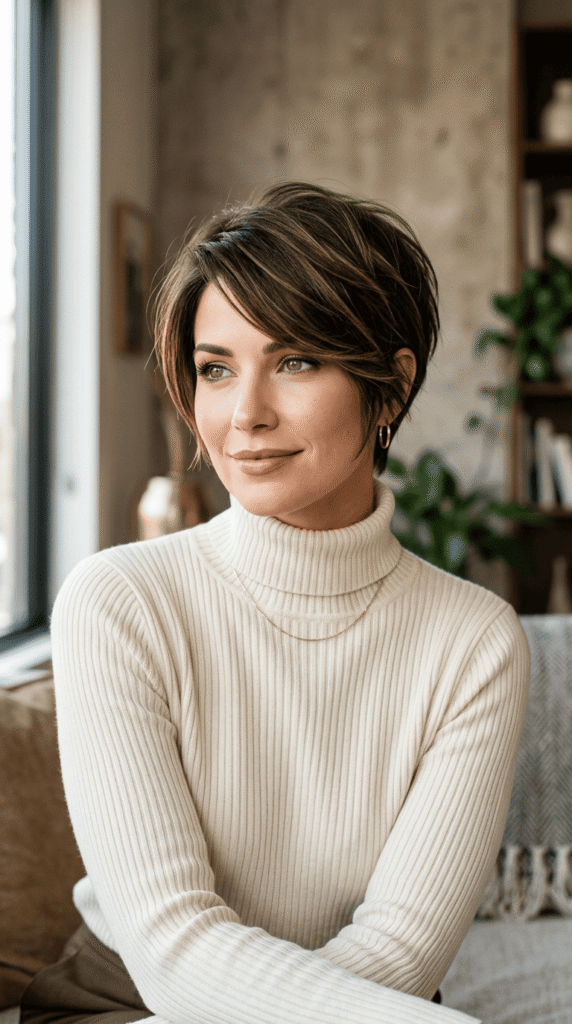
This cut keeps more length on top than a typical pixie, with long side-swept layers that sweep across the forehead and blend into shorter sides.
The color has warm caramel and honey pieces woven through darker brown, which adds dimension without needing a full head of highlights.
This style works well if you’re not ready to go super short but still want the low-maintenance appeal of a pixie.
Feminine Side-Parted Pixie with Drop Earrings
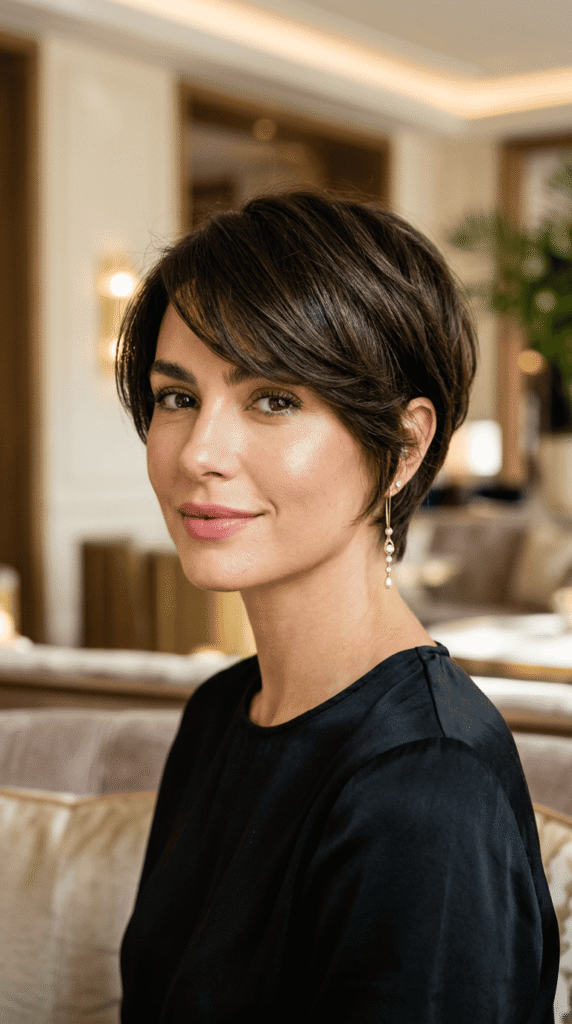
Here the top is left longer and swept to one side, tucked neatly behind the ear on the shorter side. It’s a polished, rounded shape rather than a choppy or textured one, which makes it read as more formal.
Pair this length with statement earrings, like the pearl drop shown here, since short hair leaves your ears fully visible and earrings do more visual work than they would with longer hair.
Silver Pixie with Volume on Top
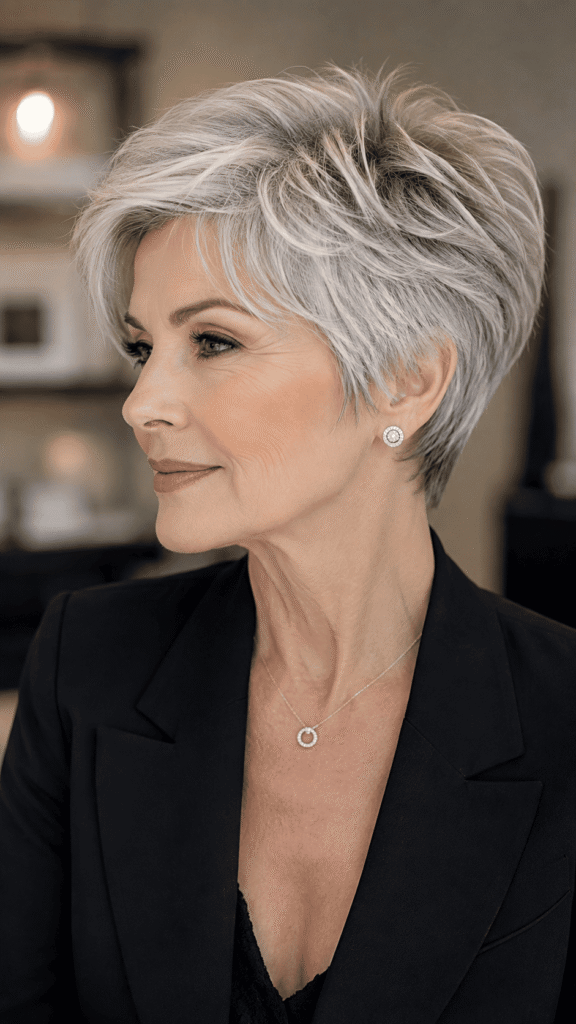
This cut shows how well a pixie works with gray or silver hair. The top is cut longer and styled with noticeable lift at the root, while the sides stay close and neat.
Volume at the crown like this is worth asking for specifically if your hair has started thinning with age, since it adds fullness without needing extensions or thickening products every day.
Glamorous Voluminous Pixie with Side Sweep
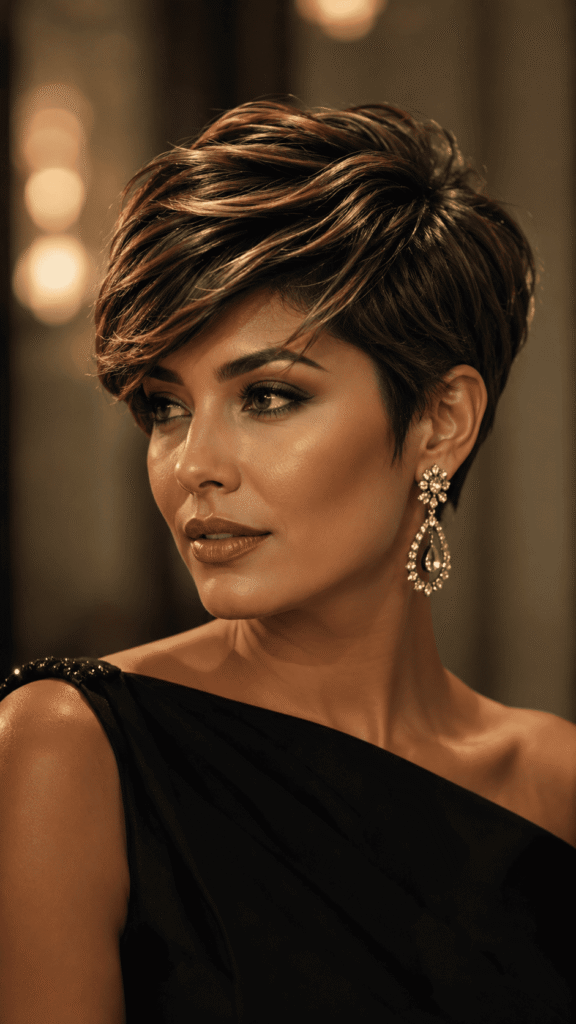
This one goes bigger than most pixies on this list, with a lot of root lift and a deep side part that lets the top fall dramatically across one side of the face.
Warm brunette tones with subtle red undertones catch the light differently depending on the angle.
This style needs some blow-drying with a round brush to get that lifted shape, so it’s better suited to special occasions than a wash-and-go routine.
Messy Textured Pixie with Wispy Fringe
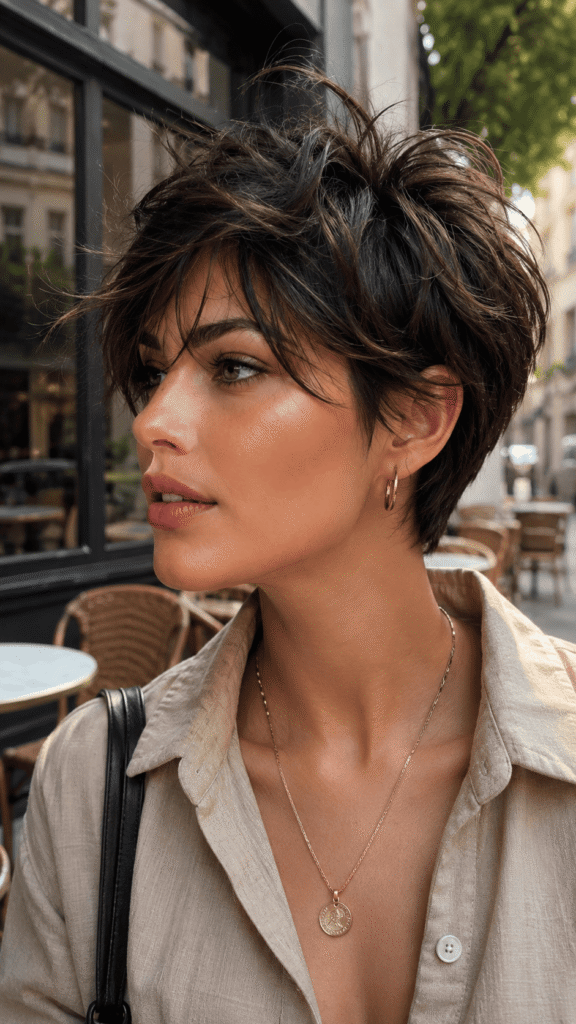
This cut has a lived-in, undone quality, pieces stick out at different angles rather than lying flat, and the fringe falls loosely over the forehead.
It photographs well outdoors and in natural light, which tells you this style doesn’t need to be perfectly smooth to look good.
If you like a low effort morning routine, ask your stylist for this kind of piece-y texture instead of a sleek finish that requires more products and tools.
Long Pixie Bob with Wispy Fringe
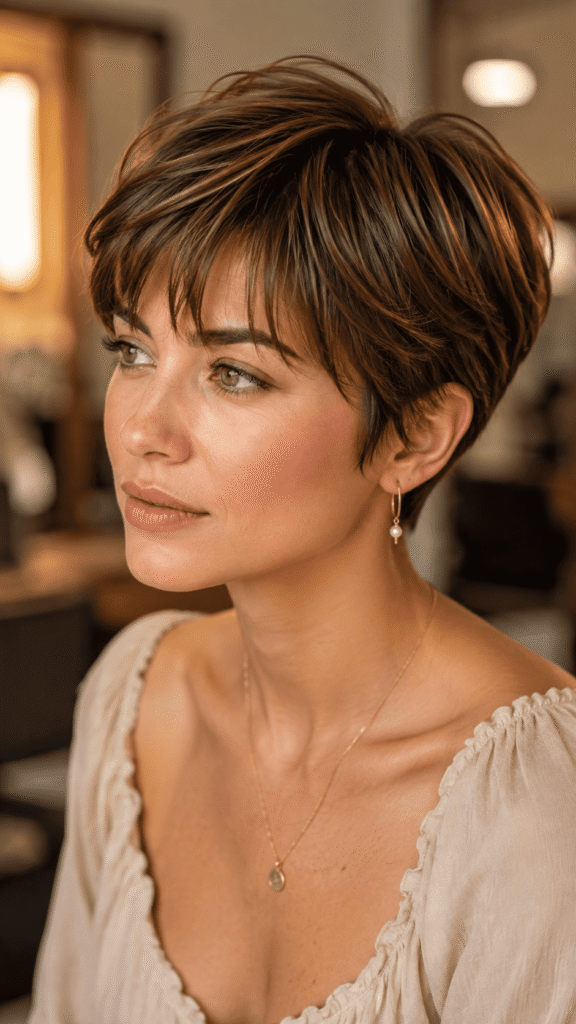
This is closer to a pixie bob hybrid, with more length through the crown and a soft, wispy fringe that doesn’t fully cover the forehead.
The layering creates a rounded silhouette that tapers down at the neck. This length is a good bridge option if you’re growing out a shorter pixie or growing into one from a bob, you get some of the ease of short hair without committing to something very cropped.
Sleek Textured Pixie with Undercut Sides
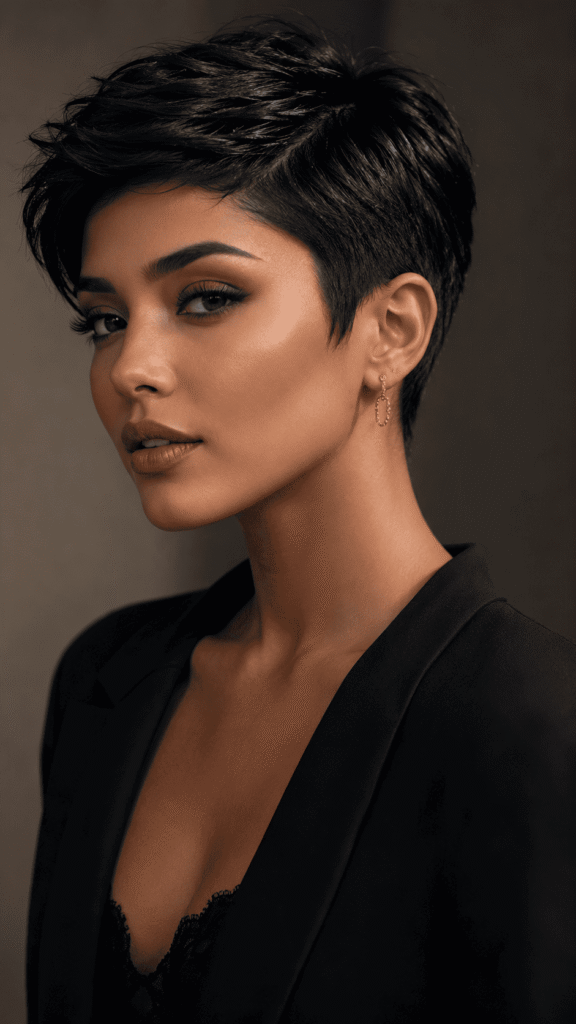
This cut is sharper and more structured, with closely cropped sides that reveal the shape of the head and a slightly longer, textured top.
It has an edgier feel than the softer pixies on this list, especially paired with dark eye makeup and a blazer.
If you want a pixie that feels a little more fashion-forward, ask specifically for an undercut at the sides rather than a gradual taper.
Wispy Layered Pixie with Curtain Fringe
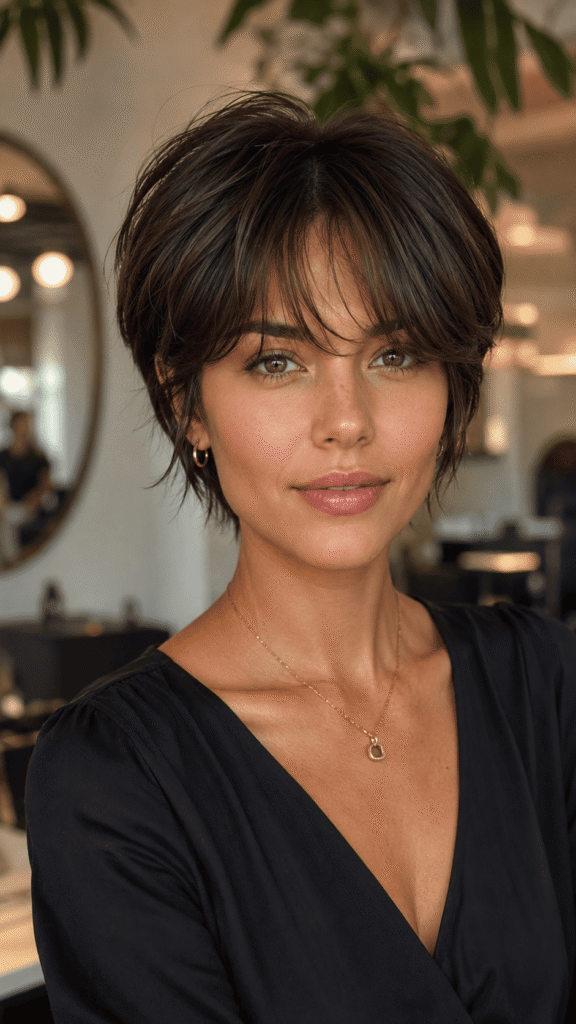
This one has longer, face-framing pieces at the front that part naturally down the middle, almost like a mini curtain fringe.
The layers throughout keep it from looking too structured or blunt. It’s a flattering option if you have a rounder or fuller face shape, since the pieces framing your cheeks help break up width the same way curtain bangs do on longer hair.
Copper Pixie with Loose Waves
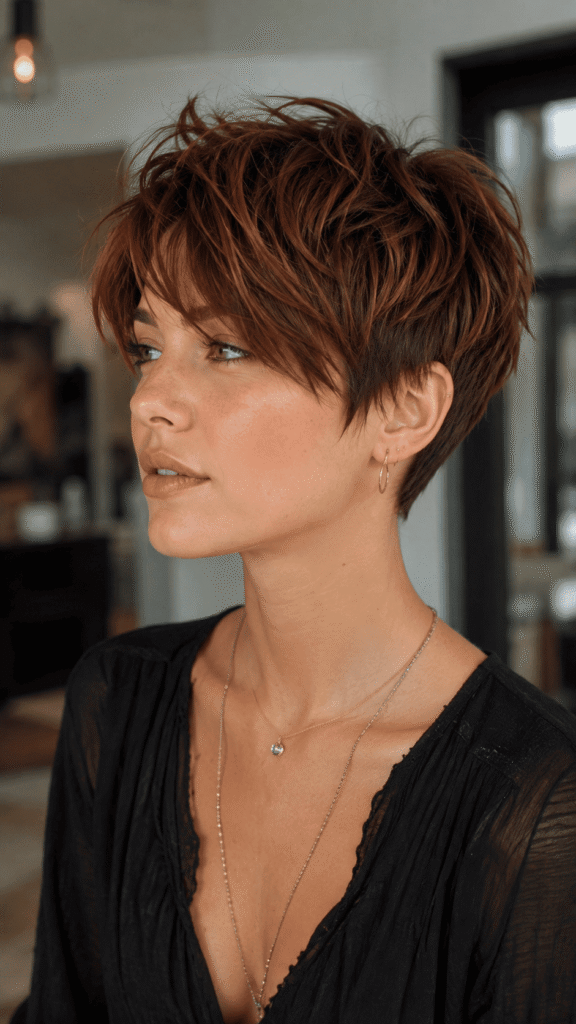
This cut shows what a pixie looks like with warm copper red coloring and a slightly wavy texture rather than pin-straight hair.
The layers are choppy and uneven in a way that works with natural wave patterns instead of fighting them.
If your hair has natural texture, don’t feel like you need to flat-iron it into submission for a pixie to work, this photo is proof that waves and pixies pair well together.
Classic Side-Swept Pixie with Face-Framing Layers
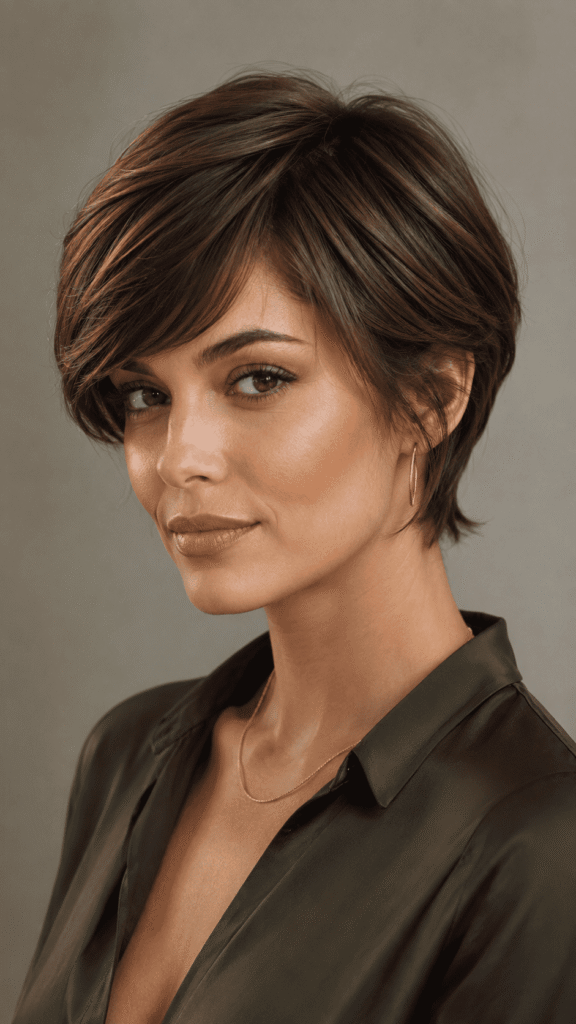
This is a fairly traditional pixie shape, swept to the side, with layers that taper down along the jaw and cheek.
It’s polished without being stiff, and the length is short enough to stay low-maintenance but long enough to still style a few different ways. This is a solid “starter” pixie if you’ve never gone this short before and want something classic rather than trendy.
Edgy Undercut Pixie with Piercings
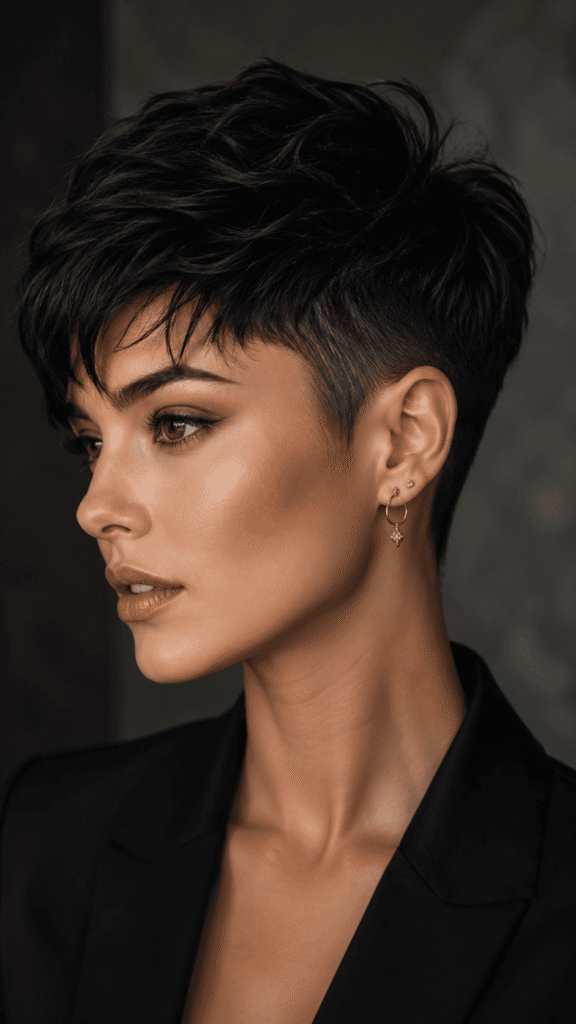
This cut is the boldest on the list, with a clean undercut on the sides, longer swept-back hair on top, and several visible ear piercings adding to the look.
The undercut is sharp enough that you’ll need touch-ups every few weeks to keep the line clean, more often than the softer, blended pixies elsewhere in this list.
It’s worth it if you want a cut that feels intentional and a little tougher.
Soft Choppy Pixie with Side Fringe
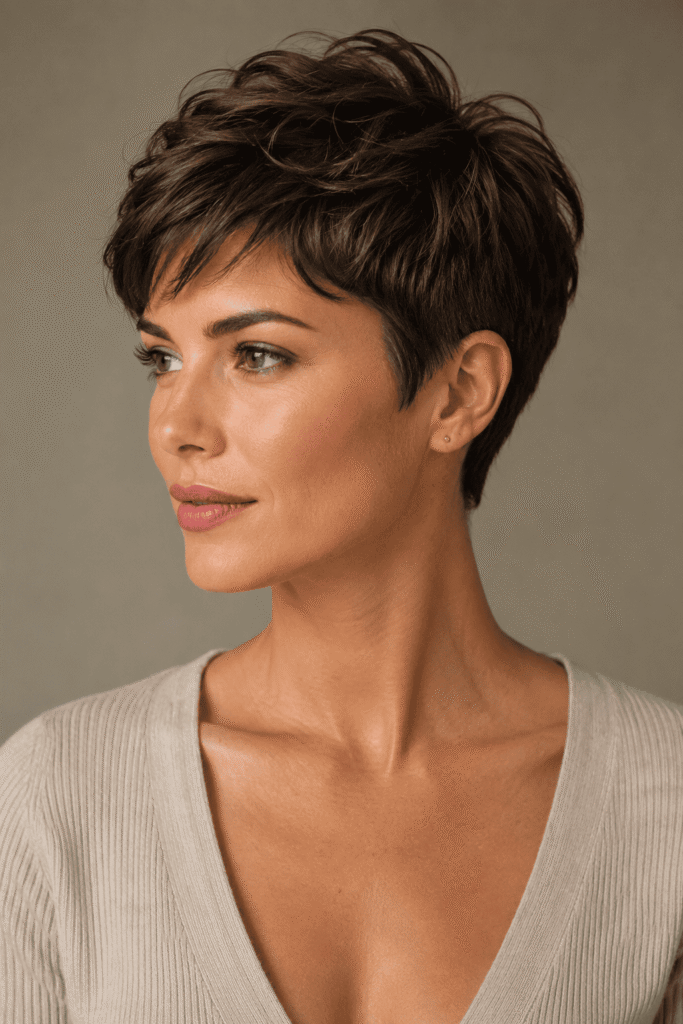
This cut keeps some length in the crown with soft, choppy layers and a side fringe that grazes the brow.
It sits somewhere between casual and polished, which makes it flexible for both everyday wear and slightly dressier occasions.
Small pearl or stud earrings, like the one shown, complement this length without competing with the fringe.
Curly Cropped Pixie
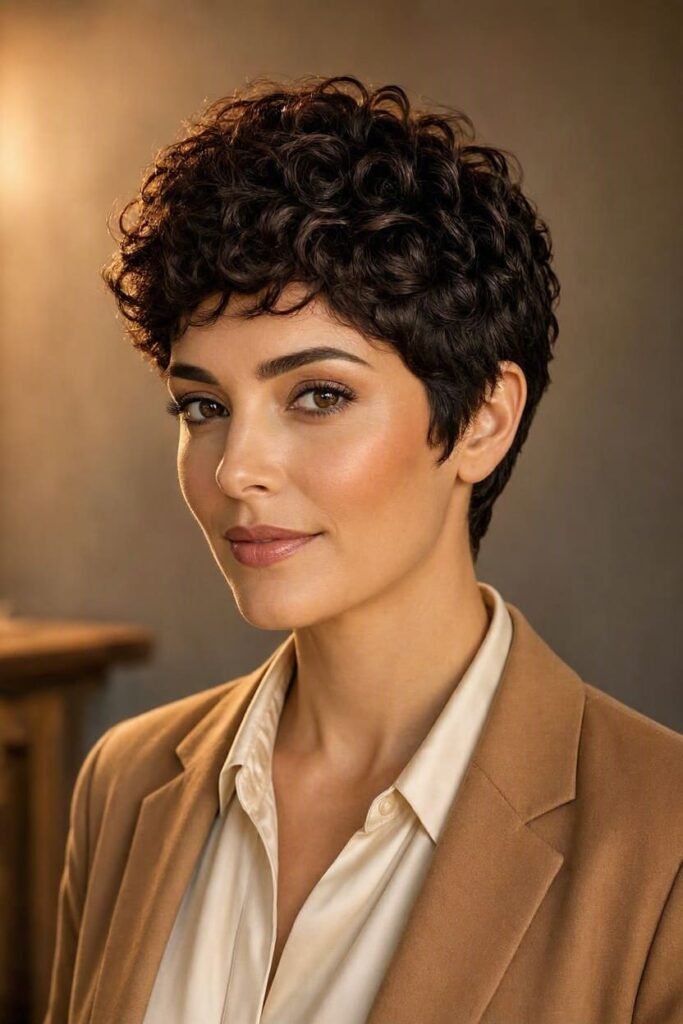
This cut is proof that pixies aren’t just for straight or wavy hair. The curls here are left natural and full on top, cropped shorter at the sides, so the curl pattern itself creates texture and shape without much styling needed.
If you have natural curls and are nervous about going short, ask your stylist to cut with your curl pattern in mind rather than cutting it dry-straight, since curls shrink up once they dry.
How to Choose the Right Pixie Length for Your Hair Type
Not every pixie style will behave the same way once it’s actually cut, and a lot of that comes down to your natural hair texture.
If your hair is fine or thin, styles with more layering and root lift, like the silver pixie in image 3 or the voluminous one in image 4, will help create the appearance of thickness. Flat, one-length pixies tend to look sparse on fine hair, so ask for internal layers even if the outer shape looks smooth.
If you have thick or coarse hair, you have more flexibility, textured, piece-y cuts like the messy pixie in image 5 or the copper wavy one in image 9 will hold shape and movement better than they would on fine hair.
Curly hair, as shown in image 13, needs to be cut while dry or with curls activated, since curls behave differently wet than dry and a stylist cutting on wet hair alone can end up with a shape that looks off once it dries.
For styling time, undercut and closely cropped styles (images 7 and 11) need the most upkeep in terms of salon visits, usually every 3 to 4 weeks, to keep the shorter sections from growing out unevenly. Longer, more layered pixies (images 1, 2, 6, and 10) can usually stretch to 6 to 8 weeks between cuts since the growth blends in more naturally.
Final Thoughts
Pixie hairstyles for women aren’t one-size-fits-all, your hair texture, face shape, and how much styling time you’re willing to put in each morning all matter.
Whether you want something soft and face-framing or sharp with an undercut, there’s a version here worth trying.
Save the ones that match your texture and lifestyle, and bring them to your stylist so they know exactly what you’re after.