If you’ve got a bigger forehead, you already know the struggle of certain haircuts making it the main focus instead of just one part of your face.
The good news is that hairstyles for big foreheads aren’t about hiding it completely, they’re about balancing it out with the right fringe, part, or layering so your whole face reads evenly.
Some styles use soft, wispy bangs, others use volume at the crown or a deep side part to shift the focus. Here are thirteen real examples worth showing your stylist next time you’re due for a cut.
Hairstyles For Big Foreheads
Long Waves With Soft Curtain Fringe
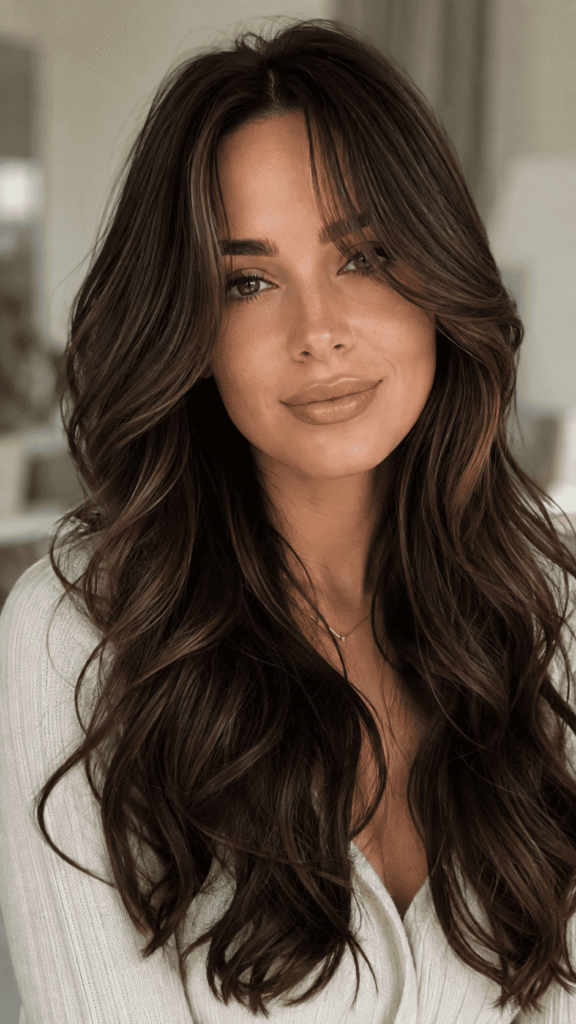
This style keeps the length long and wavy while adding a light, parted fringe that skims just above the brows.
The middle part in the bangs is key here, it splits the forehead into two smaller sections instead of leaving it exposed as one wide space.
Because the fringe is airy rather than thick, it still lets some skin show through, so it softens without feeling heavy.
Voluminous Layers With Face-Framing Pieces
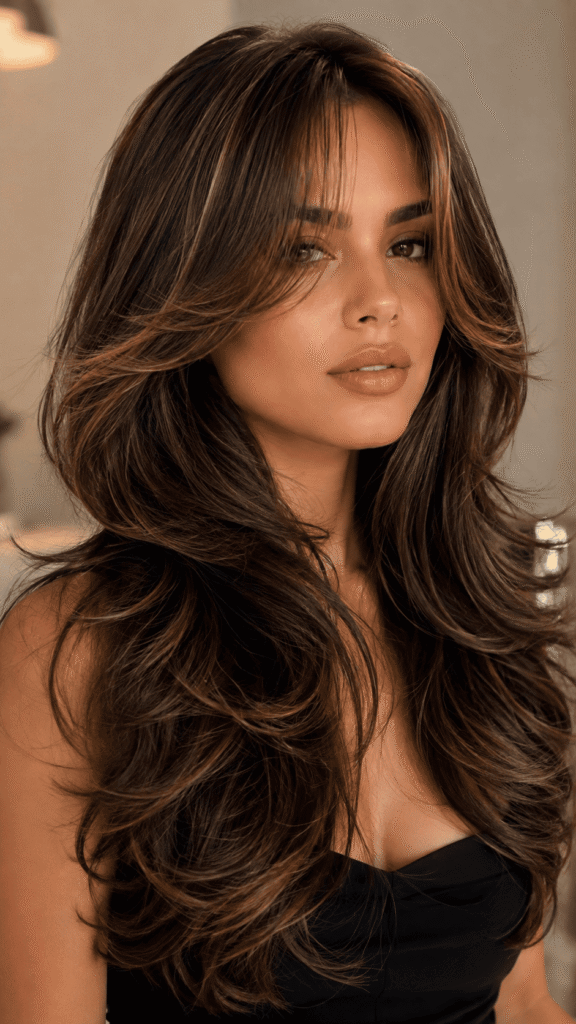
Big, bouncy layers here start close to the face and build volume as they go down, with a wispy fringe brushing the forehead.
The layering right at the temples pulls the eye outward and downward at the same time, which takes attention off forehead width.
If your hair holds curl well, asking for layers cut this way gives you natural movement without much daily styling effort.
Long Layers With a Deep Side Part
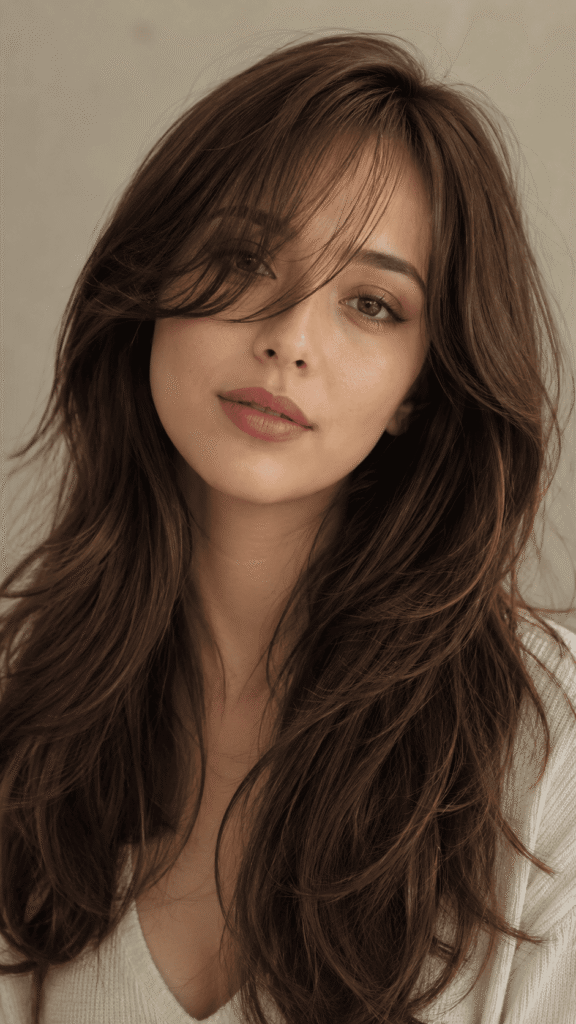
Here the fringe is pushed almost entirely to one side, covering a good portion of the forehead with soft, wavy strands.
A deep side part like this is one of the easiest fixes if you don’t want full bangs, it still covers a chunk of the forehead while keeping the rest of your length free and flowing.
This works especially well if your hair has natural wave or volume, since flat hair can sometimes fall out of a deep part throughout the day.
Glamorous Side-Swept Waves
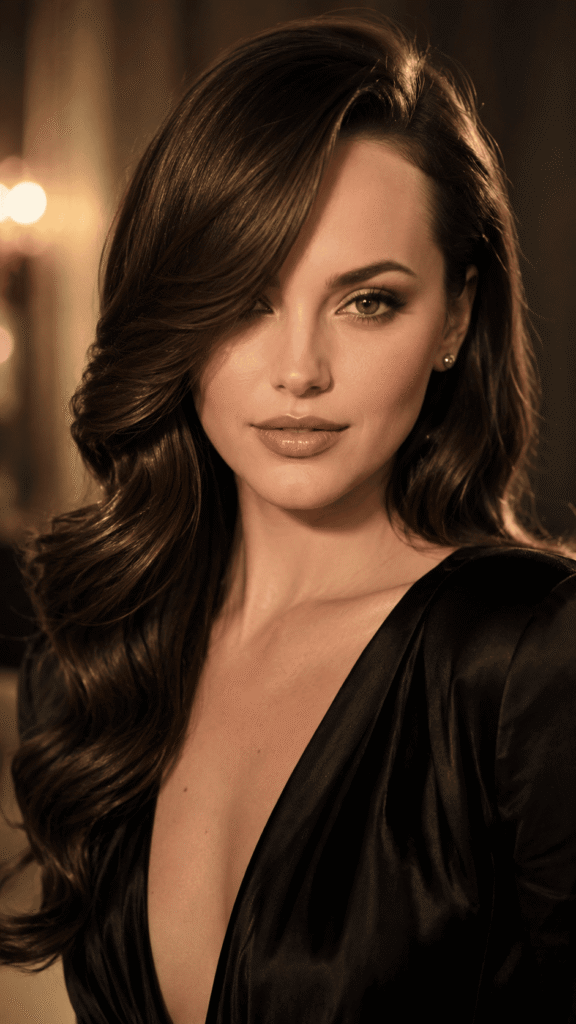
This look goes bigger and more polished, with the hair swept dramatically to one side in smooth waves that fall diagonally across the forehead.
Unlike a casual side part, this version has real volume and lift at the root before the hair sweeps down, which adds drama while still doing the job of covering the forehead.
This is a great special-occasion option if you want your hair styled but still want forehead coverage built in.
Shaggy Layers With Choppy Bangs
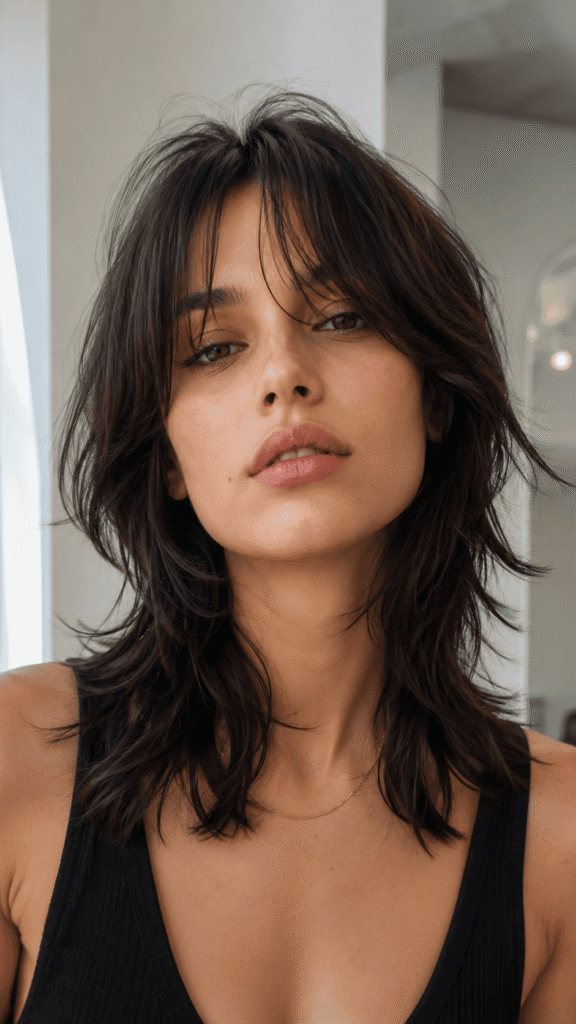
This cut takes a more undone, textured approach, piece-y layers throughout with choppy bangs that don’t sit in one clean line.
The broken-up bang shape means it’s not doing one uniform job of covering the forehead; instead, different pieces fall at different lengths, creating a more relaxed, lived-in look.
If you don’t want bangs that need daily blow-drying to look right, this shaggier version is more forgiving.
Blunt Bob With Full Fringe
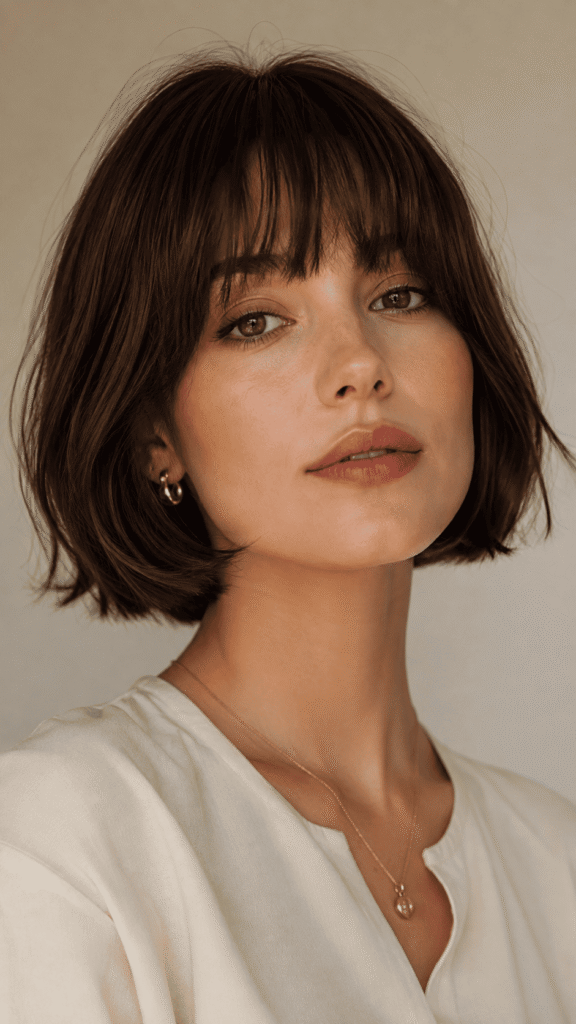
A classic blunt bob paired with thick, straight-across bangs that stop right above the brows. This is one of the most direct ways to deal with a bigger forehead, full, blunt bangs simply cover it completely.
The rest of the bob falls right at the jaw, which also keeps the whole look balanced instead of top-heavy.
This style does need more upkeep since blunt bangs grow out and need trims more often than longer, layered ones.
Long Hair With Wispy, Parted Bangs
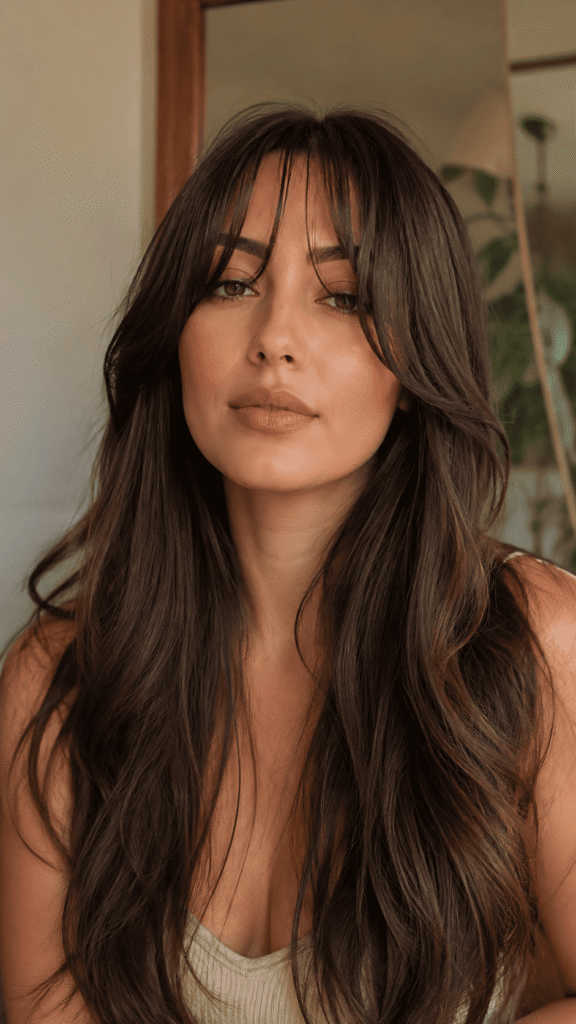
This style keeps the length past the chest with soft, feathery bangs parted just off-center.
The wispiness here is what makes it different from a full fringe, you get some forehead coverage without it looking like a solid block of hair sitting on your face.
It’s a low-commitment way to try bangs if you’re nervous about going too short or too thick.
Shaggy Layers With Heavy Side Fringe
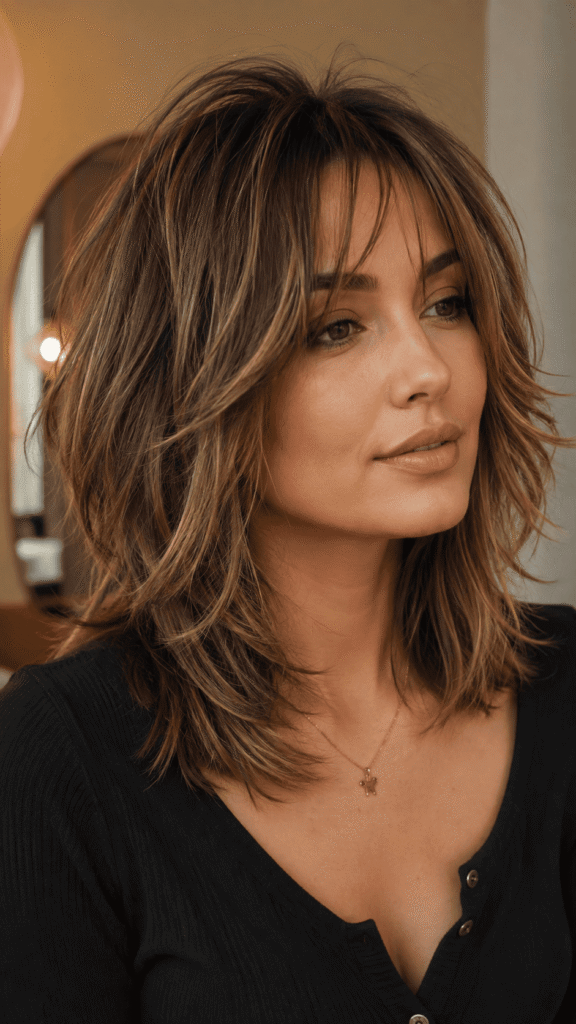
This one combines choppy, textured layers throughout with a fuller side-swept fringe that covers more of the forehead than a wispy version would.
The layering gives it movement, while the denser fringe section does more actual coverage work. This is a good middle ground if you want the visual interest of a shag cut but still need serious forehead coverage.
Soft Updo With Loose Face-Framing Strands
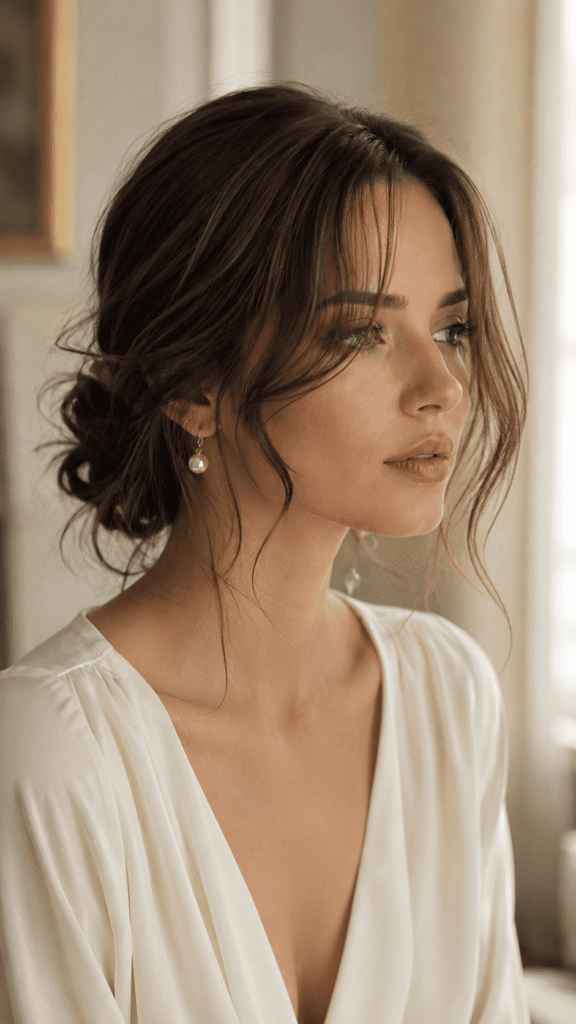
Instead of using bangs, this updo pulls most of the hair back into a low, loose bun but leaves soft pieces out around the face and temples.
Leaving strands out like this breaks up the forehead space even without a fringe, which is a good trick for updos or half-up styles when you don’t want full bangs but still want some visual softening near the hairline.
Half-Up Style With Volume at the Crown
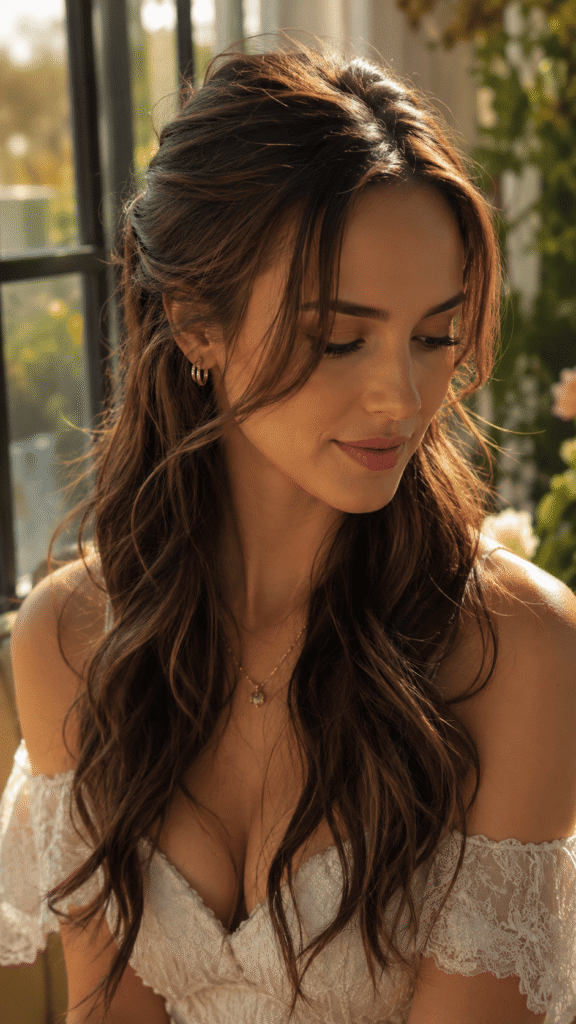
This look pulls the top section back loosely while leaving the rest down in waves, with noticeable lift and volume right at the crown.
Building height at the root draws the eye upward and back, which shifts attention away from forehead width.
This is a nice option for the days you want your hair half up but still want some forehead-softening effect happening near the hairline.
Cropped Pixie With Long Side-Swept Fringe
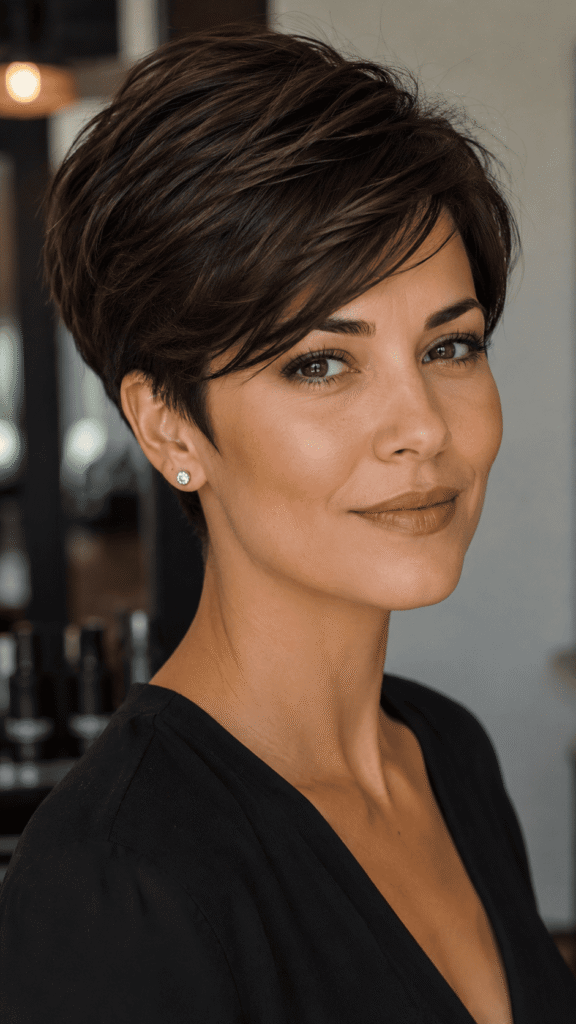
Short hair can absolutely work for a bigger forehead, and this pixie proves it, the top is left longer with volume, and the fringe is swept dramatically to one side, long enough to fall past the eyebrow.
The key detail is the length of the fringe itself; a short, choppy pixie fringe would expose more forehead, but this longer sweep does real coverage work while keeping the rest of the cut short and low-maintenance.
Textured Shoulder-Length Bob With Wispy Fringe
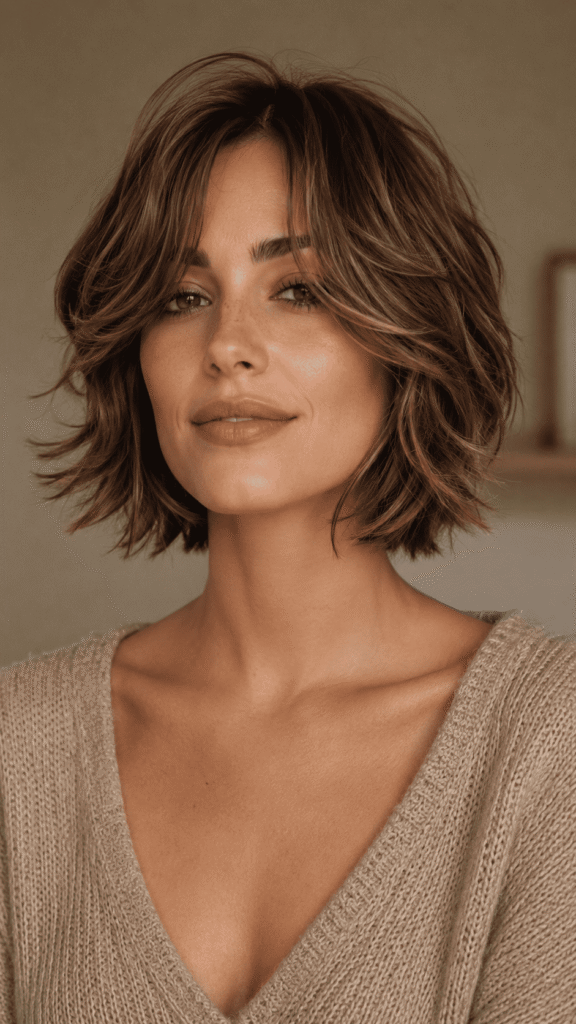
This bob sits right at the shoulders with lots of texture and movement, paired with a light, wispy fringe similar to the long-hair versions on this list.
It shows that the wispy-fringe approach isn’t just for long hair, it translates just as well to shorter, choppier cuts, giving you forehead coverage without a heavy, blunt look.
Sleek Low Ponytail With Side-Swept Bangs
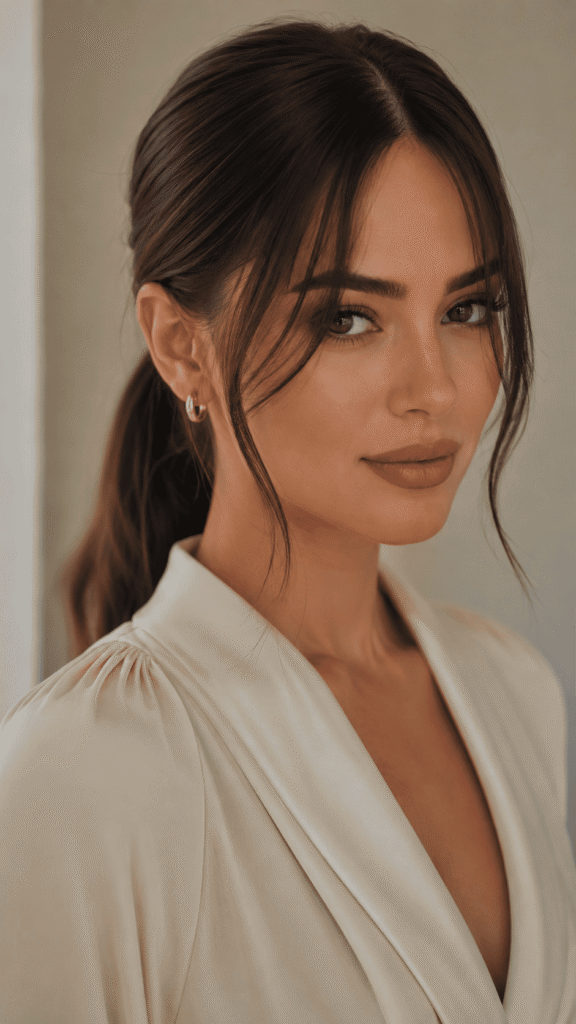
This style pulls the hair back smooth and sleek into a low ponytail, while keeping a side-swept fringe loose at the front.
It’s proof that pulled-back styles don’t have to expose your whole forehead, keeping even one section of hair down and swept to the side at the front does a lot of visual work while the rest of your hair stays neat and out of your face.
Choosing Bangs That Actually Suit Your Hair Type
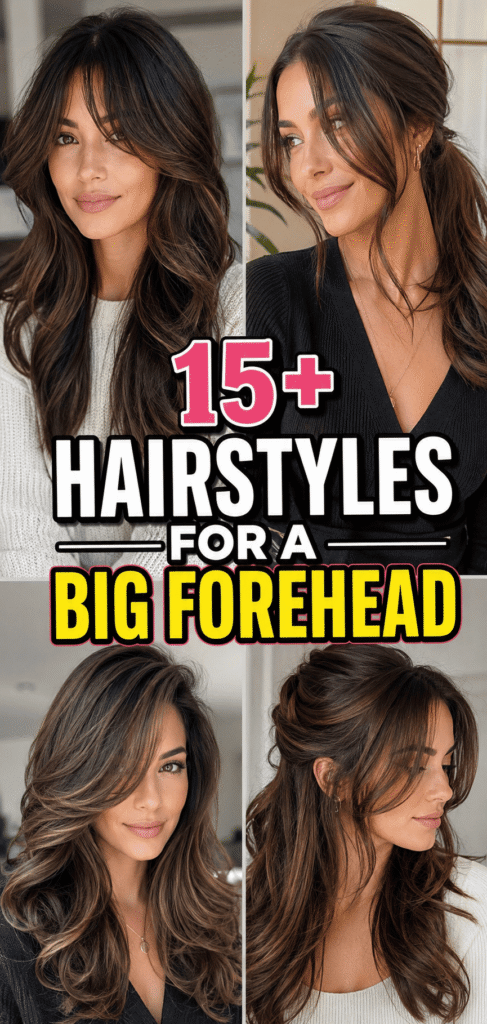
Not every fringe style works the same way on every hair type, so here’s what to think about before you commit –
- Fine or thin hair – Wispy, parted bangs (like the ones in the long-hair examples above) tend to work better than thick, blunt ones, since fine hair can look sparse and see-through if cut too heavy and straight across.
- Thick or coarse hair – You can handle a fuller, blunt fringe without it looking flat, so a style like the classic bob with full bangs is a realistic option.
- Wavy or curly hair – Curtain bangs and side-swept fringes usually blend better with natural texture than blunt, straight-across cuts, which can look choppy as your hair dries and the curl pattern takes over.
- Straight hair – Blunt or heavier fringes hold their shape more predictably on straight hair, but they’ll need more frequent trims to avoid growing out into your eyes.
- If you’re unsure, start with a side-swept or curtain style – Both are easier to grow out or adjust later than a full blunt fringe, so they’re a safer first step if you’ve never had bangs before.
Final Thoughts
Whether you go for full blunt bangs, a wispy curtain fringe, or just a deep side part with some face-framing pieces, there’s a hairstyle for big foreheads here that can work with your length, texture, and how much daily styling you’re willing to do.
Bring a couple of these photos to your stylist, mention your hair type, and let them help you figure out which version will actually hold up between salon visits.