Finding hairstyles for women over 60 that actually suit you isn’t about following rules on what you “should” cut off at a certain age.
It’s about picking a length, texture, and color that works with what your hair is actually doing now, whether that’s embracing gray, adding movement to finer strands, or just finding a cut that doesn’t need an hour with a hot tool every morning.
These thirteen looks cover everything from cropped pixies to long waves, so there’s a real mix here depending on how much time and hair you have to work with.
Hairstyles for Women Over 60
Rounded Bob With Side-Swept Layers
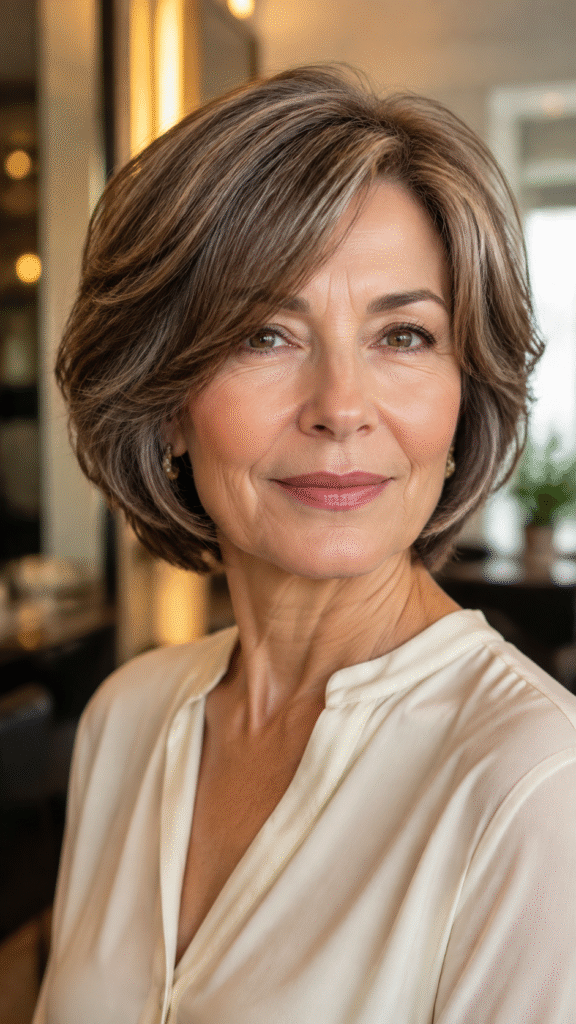
This bob sits right at the jaw with soft, rounded layers that sweep across the forehead instead of a hard part.
The layering near the face is doing real work here, it softens the jawline and adds movement without needing much more than a blow-dry and a round brush.
This is a good option if you want something polished for everyday wear but don’t want to deal with much daily styling.
Cropped Pixie With Textured Fringe
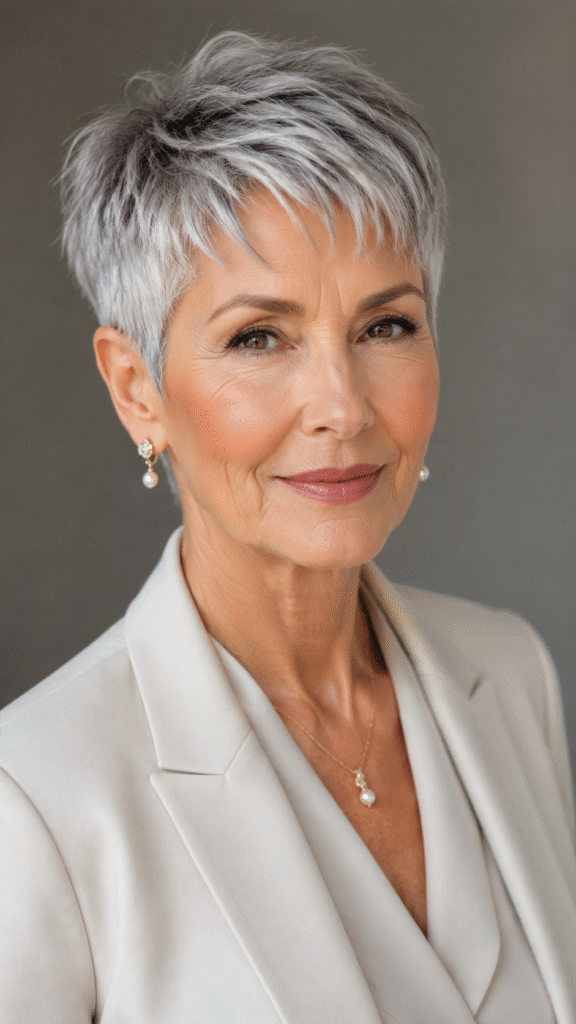
Fully gray and cut short all over, this pixie has a slightly longer, piecey fringe that falls forward, giving it more personality than a plain buzzed style.
Short cuts like this are genuinely low-maintenance, a little product worked through with your fingers is often all you need.
If your hair has gone gray and you want to let the color be the main feature, a simple, well-cut pixie like this lets it show.
Shoulder-Length Waves With Face-Framing Layers
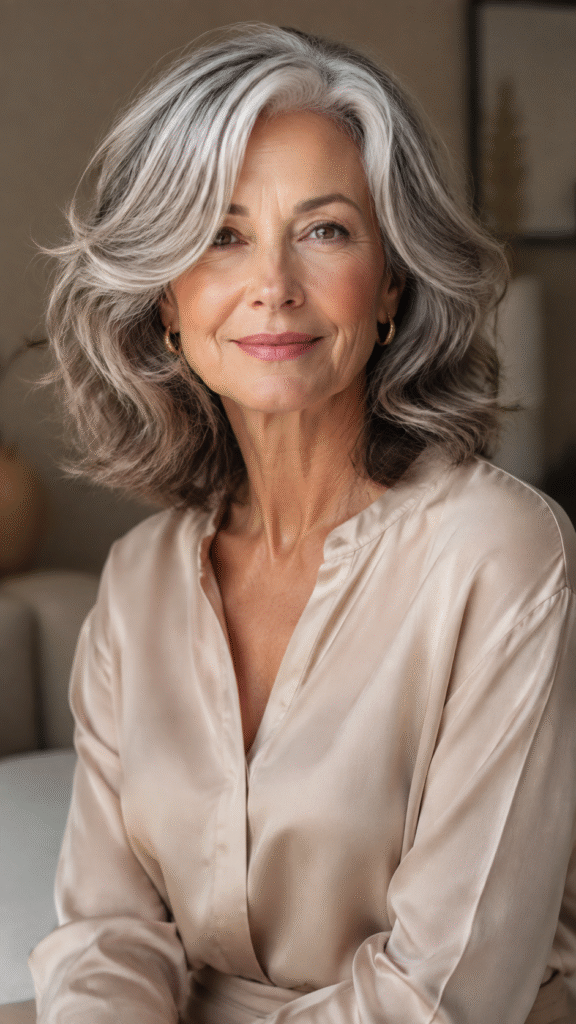
Here the hair falls in loose waves to the shoulders, with layers cut in around the face that curve inward toward the chin.
The gray and silver tones through the length add natural dimension, so the waves catch light differently throughout.
This length is a nice middle ground if you’re not ready to go short but want something with more shape than one flat length.
Short Layered Bob With Side Fringe
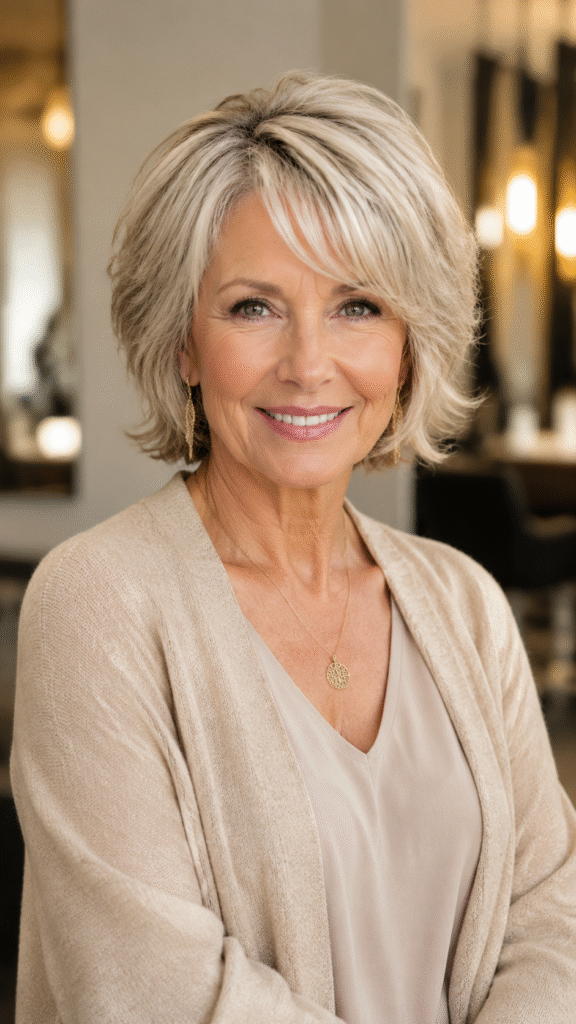
This cut is fuller through the crown with feathered layers and a side-swept fringe that skims the brow.
The layering adds volume at the root, which is worth asking your stylist about specifically if your hair has thinned with age, volume at the crown does a lot to make hair look fuller overall, even if the actual density hasn’t changed.
Long Waves With a Deep Side Part
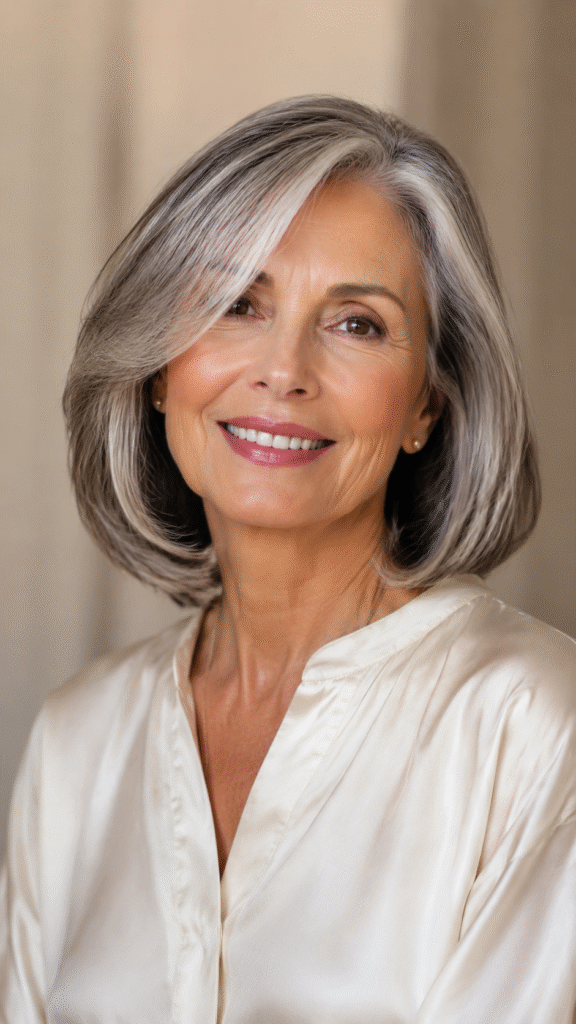
This one keeps the length past the shoulders with soft, loose waves and gray tones woven through a warm base color.
A deep side part like this creates a diagonal line across the forehead, which tends to look more flattering than a straight center part on many face shapes. If your hair has good length and some natural wave, this is a low-effort way to style it.
Choppy Pixie With Face-Framing Fringe
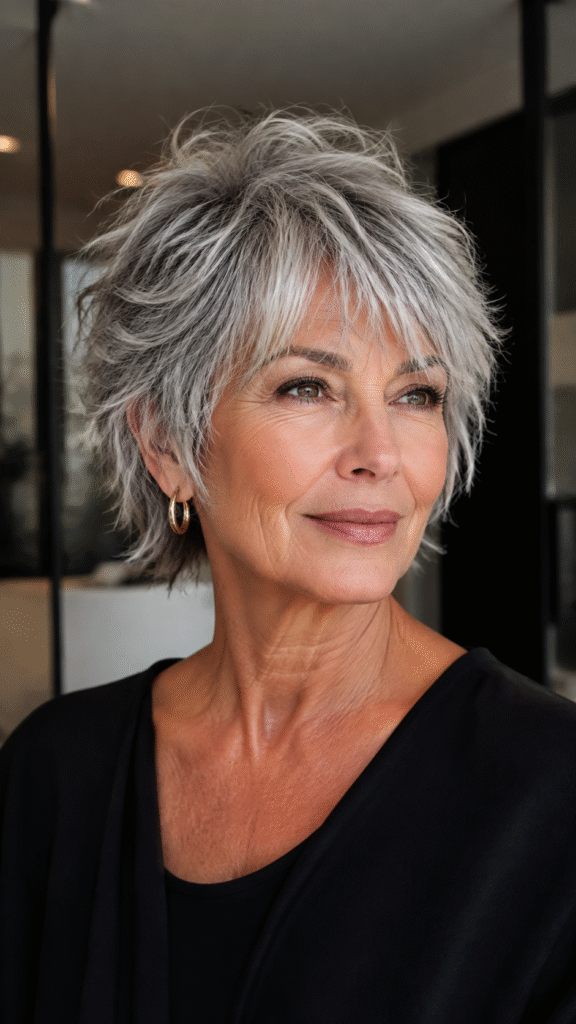
This pixie has more texture and movement than a classic crop, with choppy, piecey layers on top and a fringe that falls just above the brow.
The mixed gray and white tones give it extra dimension. This style suits anyone who wants short hair but doesn’t want it to look too neat or structured, a bit of texturizing spray and some finger-styling is really all it takes.
Low Bun With Soft Face-Framing Pieces
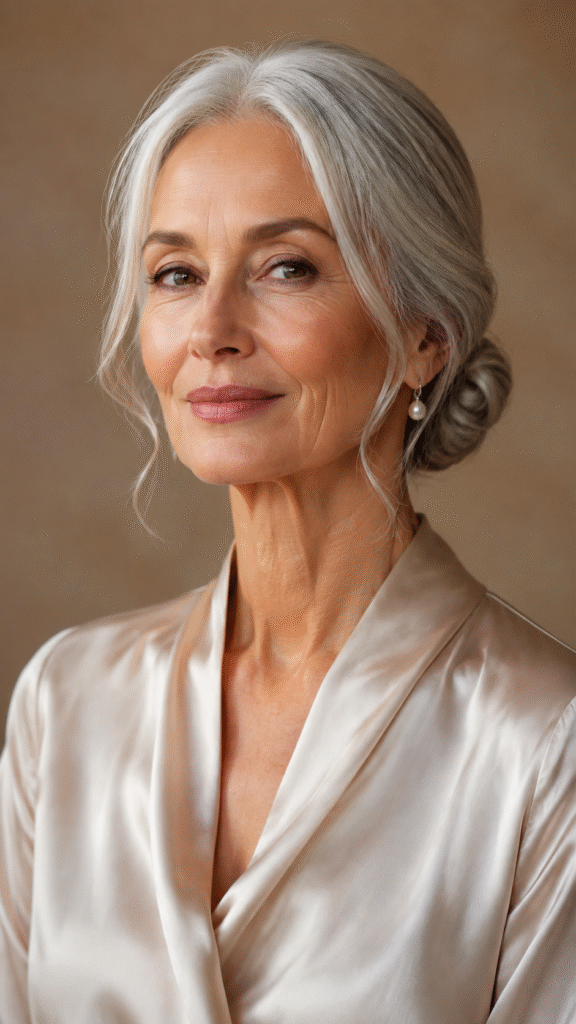
Fully silver hair is pulled back into a smooth, low bun here, with a few soft pieces left loose around the face.
This is a great option for more formal occasions, weddings, dinners out, work events, since it looks put-together without needing a fresh blowout. The loose pieces at the front keep it from looking too severe.
Long, Loose Waves Left Down
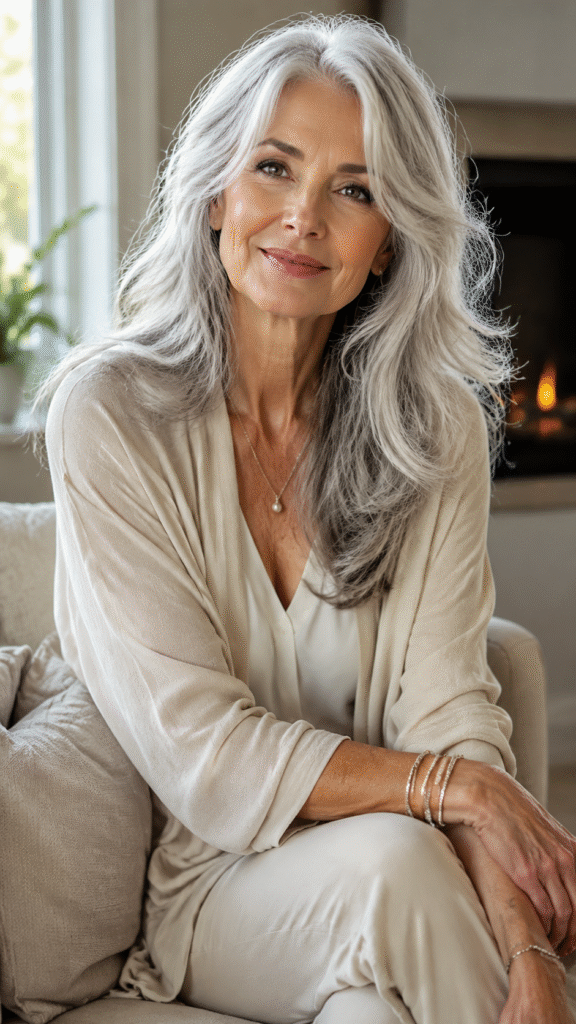
This is a longer style with lots of natural-looking wave and volume, worn completely down and loose.
Long hair on women over 60 gets an unfair reputation for not “working,” but as this shows, it really comes down to healthy ends and some movement through the length rather than length itself being an issue.
Regular trims to keep the ends from looking stringy make a big difference here.
Bob With Blunt Fringe
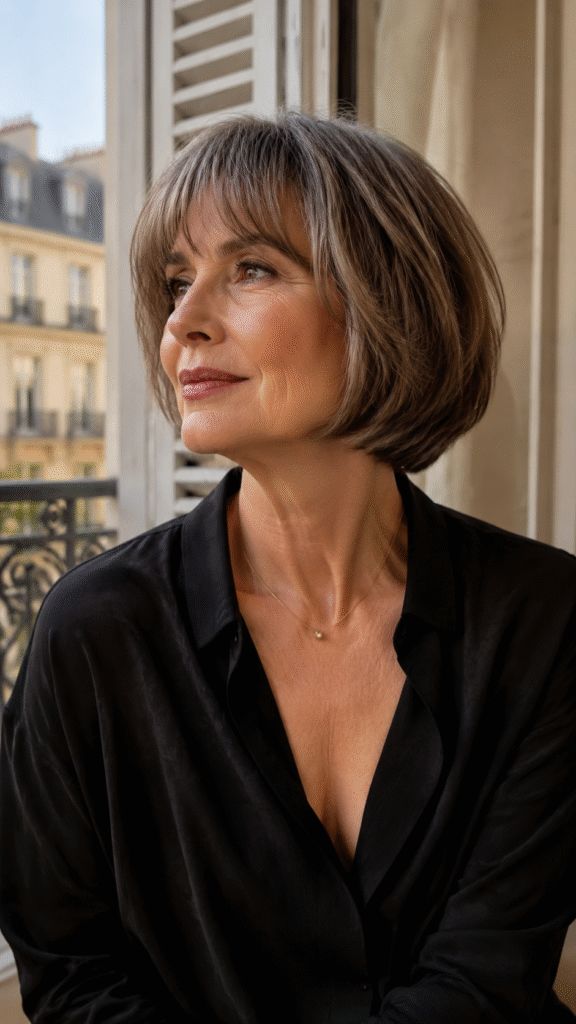
This shoulder-length bob has a fuller, blunt fringe that sits just above the eyebrows, paired with soft layers throughout the rest of the cut.
A defined fringe like this is a good way to frame the face and draw attention upward, and it pairs well with straighter hair textures that hold a blunt line without frizzing out.
Curly Pixie Crop
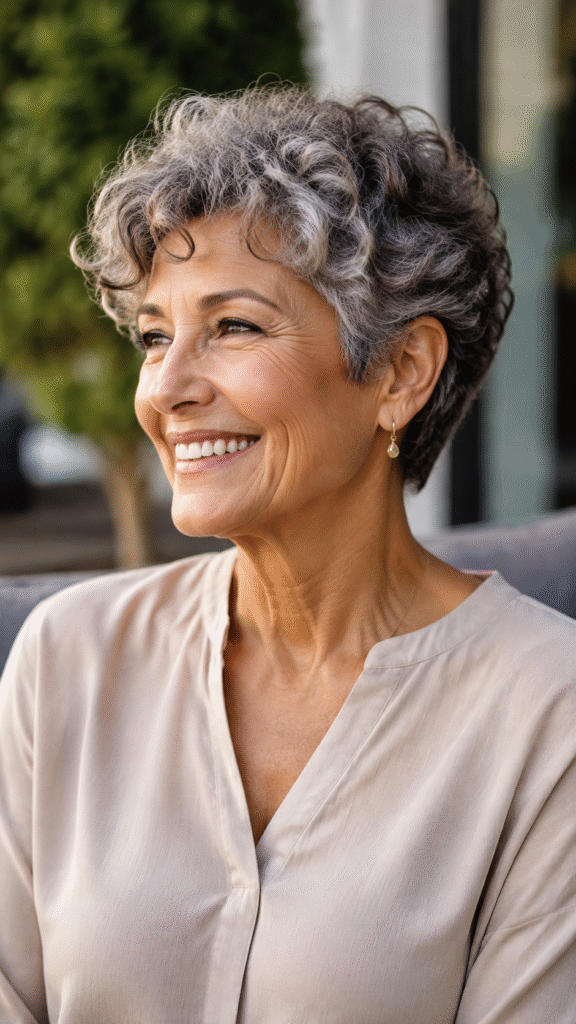
This short curly style lets natural curl pattern do most of the work, cropped close on the sides with more length and curl left on top.
If your hair is naturally curly or wavy, working with that texture in a shorter cut like this is often easier to manage day to day than trying to straighten it out, and it tends to look fuller than the same length would in straight hair.
Voluminous Layered Bob
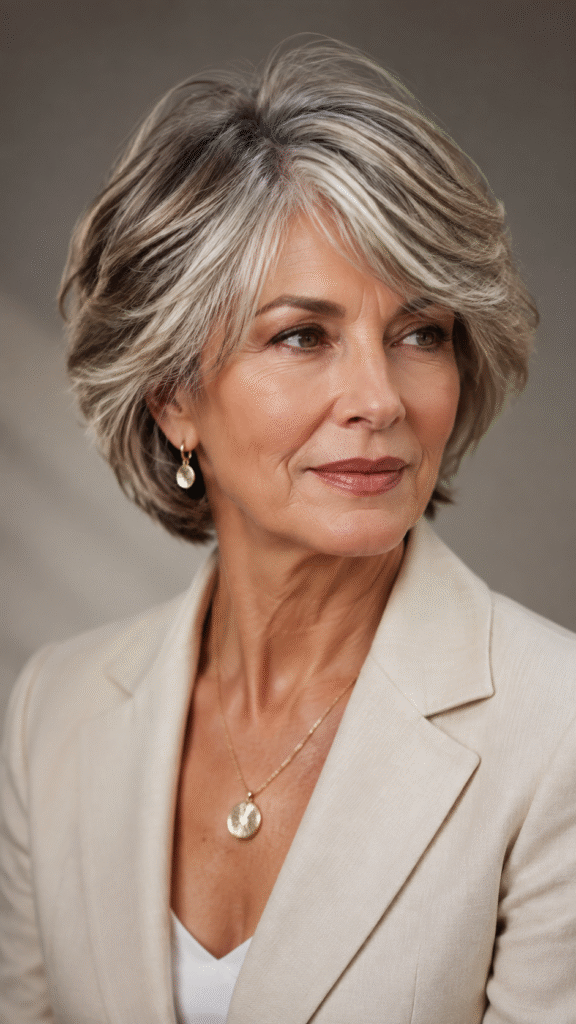
This bob is cut with heavier layering through the crown and sides, giving it noticeably more volume and lift than a flatter bob style.
The side-swept fringe adds softness at the front. This is worth mentioning to your stylish, if your main concern is hair looking flat by midday, asking specifically for layers that build volume at the root, not just at the ends, makes a real difference.
Curly Bob With Volume All Over
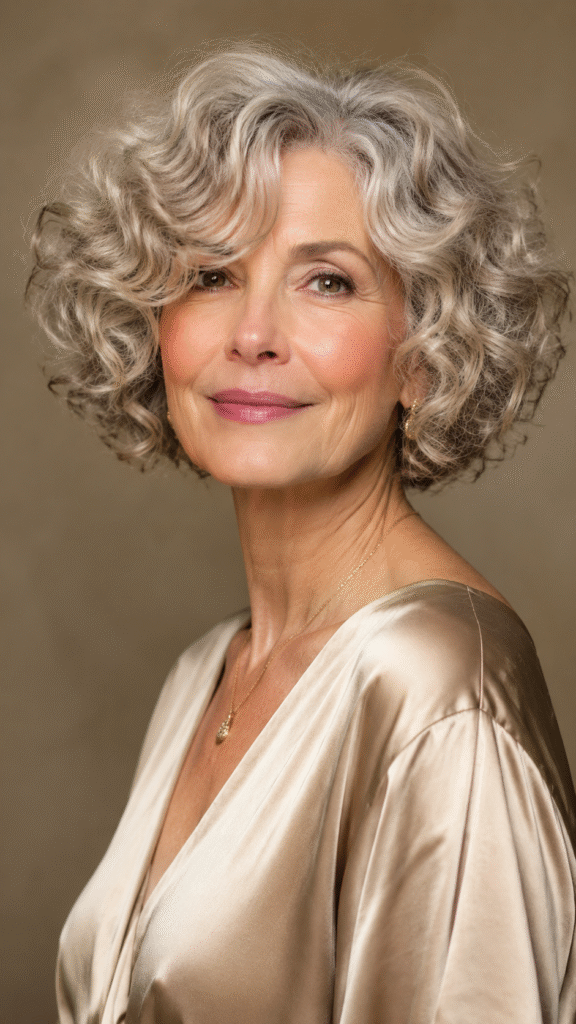
This one takes a curlier texture and lets it fill out into a rounder, fuller bob shape rather than cropping it close. The result has a lot of body and movement.
If you have curl and have been considering cutting it shorter, this shows that curly hair doesn’t need to be sacrificed for a shorter length, the two can work well together.
Sleek, Straight Bob
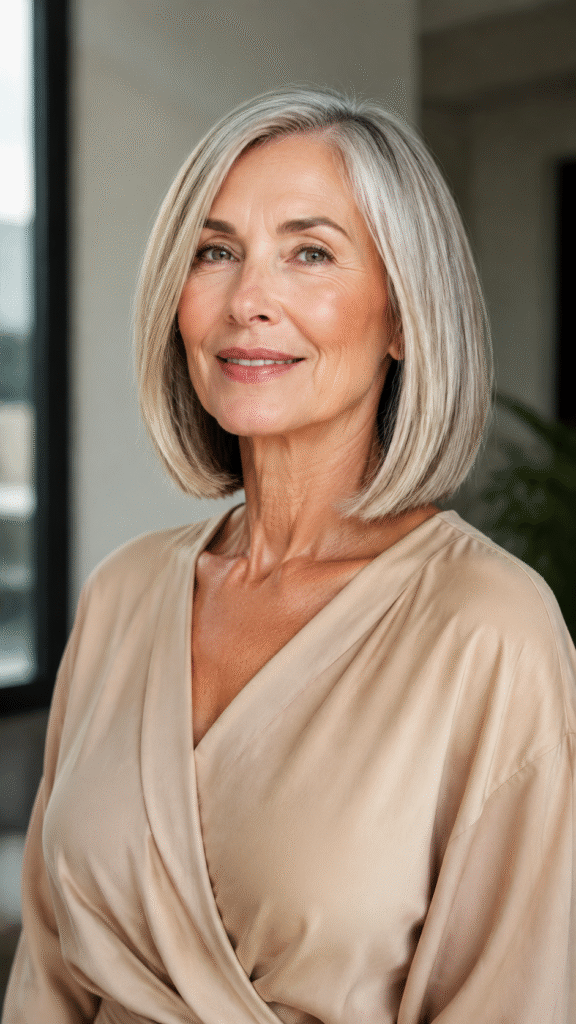
This bob is worn poker-straight with a soft inward curve at the ends and no fringe, giving it a clean, polished look.
Straight styles like this tend to photograph very well and look neat for longer between washes, but they do need healthy, well-conditioned hair to avoid looking flat, especially if your hair has thinned or gotten drier with age.
Choosing a Cut That Works With Changing Hair Texture
Hair often changes texture, thickness, and even curl pattern as you get older, and picking a style that works with those changes (rather than fighting them) makes a real difference in how easy your hair is to manage.
- If your hair has thinned, ask for layers cut higher up, not just at the ends. Layers concentrated near the crown add lift and the appearance of density, while layers only at the bottom can actually make thin hair look stringier.
- If your hair has gotten drier, shorter cuts are often more forgiving. Dry ends show more on longer hair, so if you’re not keeping up with regular trims, a shorter length like a bob or pixie hides dryness better.
- If you’re transitioning to gray, ask your colorist about low-maintenance blending. Techniques like babylights or a soft balayage can ease the growing-out process so the line between your natural color and gray isn’t as obvious.
- If your natural texture has become curlier or coarser, don’t fight it with heat styling. Cuts designed to work with curl (like the curly pixie and curly bob above) usually need far less daily effort than trying to straighten texture that wants to curl.
- If volume has dropped off, ask about root-lifting products or a light perm. Sometimes it’s not about the cut at all — a volumizing mousse applied at the root, or a gentle body wave for very fine hair, can make an existing cut look fuller without starting over.
Final Thoughts
There’s no single “right” hairstyle for women over 60, it really comes down to your hair’s current texture, how much time you want to spend on it, and what makes you feel like yourself.
Whether that’s a cropped pixie, a soft bob, or long waves left down, bring a couple of these photos to your next salon visit and talk through what will actually work with your hair as it is right now.